
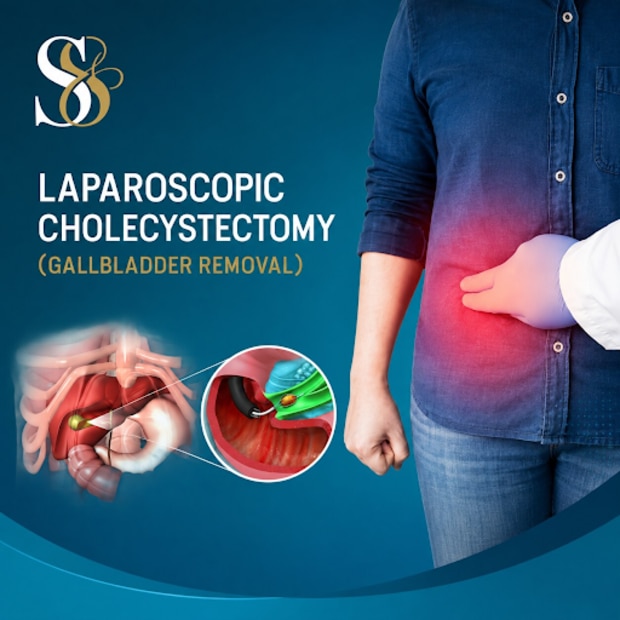
The right surgeon is not simply the one with the longest career or the shortest advertised recovery. You need to confirm that your diagnosis is correct, the surgeon regularly handles your level of risk, and the hospital can respond if the operation becomes more difficult than expected.
Key takeaways
- Confirm symptoms and test results fit gallbladder disease before choosing surgery.
- Verify the surgeon’s gallbladder experience, credentials and hospital privileges.
- Ask about bile duct injury, bleeding, infection and conversion-to-open-surgery rates.
- Leave with clear answers on recovery, warning signs and follow-up appointments.
Is surgery the right answer for your symptoms and test results?
A scan showing gallstones is not enough to justify surgery: the pain pattern, examination, blood tests and imaging must fit gallbladder disease. Biliary colic usually causes episodic right-upper-abdominal or epigastric pain, often after eating, without fever.
Persistent pain, fever, vomiting or marked tenderness raises concern for acute cholecystitis; severe epigastric pain radiating to the back with a raised lipase suggests pancreatitis.
| Finding | More consistent with | What to clarify before surgery |
|---|---|---|
| Recurrent attacks with stones, no infection signs | Symptomatic gallstones | Whether elective laparoscopic cholecystectomy is appropriate |
| Fever, persistent right-upper-abdominal pain, gallbladder-wall thickening | Acute cholecystitis | Whether early surgery is available; NICE recommends it within one week of diagnosis |
| Jaundice, dark urine, pale stools, a widened duct or abnormal liver tests | Common-bile-duct stone | Whether MRCP or endoscopic ultrasound is needed, and whether ERCP is reserved for endoscopic stone removal |
Ultrasound can find stones but cannot exclude every other cause. Peptic-ulcer disease symptom overlap or reflux diagnosis can explain upper-abdominal or chest burning, while pancreatitis, liver disease and bowel conditions need separate assessment. Incidental, symptom-free stones usually do not require routine removal.
Before choosing a surgeon, ask what explains your symptoms, which liver tests and ultrasound findings were abnormal, and whether the common bile duct has been assessed. Do not accept ERCP as a diagnostic shortcut: it carries procedure-related risks and is mainly used when a duct stone needs treatment.
How do you verify a surgeon’s gallbladder experience and credentials?
Do not use years in practice as a substitute for current gallbladder experience. Ask for the surgeon’s personal laparoscopic cholecystectomy case volume each year, not the number performed by the whole department.
| Question | What a useful answer includes | Warning sign |
|---|---|---|
| “How often do you handle acute or complicated gallbladder cases?” | A clear description of current practice, including severe inflammation, adhesions and difficult anatomy | Only routine elective cases are discussed |
| “What are your own rates of bile-duct injury, bile leak, wound infection, conversion to open surgery, unplanned readmission and reoperation?” | Recent figures and an explanation of how they are recorded | “I have never had a complication” |
| “What is your plan if you cannot obtain the critical view of safety?” | Stopping, subtotal cholecystectomy or conversion to open surgery, rather than unsafe dissection | A promise to complete every case laparoscopically |
| “What training and permissions do you hold?” | Specialist surgical training, additional laparoscopic training, current registration with the applicable medical register, and written privileges to perform this operation at the proposed hospital | Vague certificates or no hospital credentialing confirmation |
Verify registration through the relevant public register; in India, check the National Medical Commission or State Medical Council. Ask the hospital’s medical administration office to confirm operating privileges.
For acute cases, confirm access to an anaesthesia team, emergency imaging, endoscopy, blood-bank services, intensive care and an operating theatre for complications. The surgeon should also explain when intraoperative cholangiography would clarify anatomy or suspected duct stones.
What complication record and hospital support should you check?
Ask for the surgeon’s own audited figures from the past 12 months or another defined period, not a general claim of “low complications.” The bile-duct injury rate, bile leak rate, wound infection rate and unplanned readmission rate are useful only when you know the number of operations behind each percentage and whether the figures include emergency cases.
- Ask how many laparoscopic cholecystectomies the surgeon personally performs each year, including acute and technically difficult cases.
- Ask how often the surgeon converts to open surgery and how they respond to bleeding, dense adhesions, unclear anatomy or suspected bile-duct injury.
- Ask how complications are detected, treated and disclosed, including access to specialist hepatobiliary referral when repair exceeds the hospital’s expertise.
- Confirm that the hospital has an experienced anaesthesia team, 24-hour operating-theatre access and intensive-care support.
- Confirm emergency ultrasound or CT, magnetic resonance cholangiopancreatography when indicated, endoscopy for ERCP and an on-site blood bank.
- Ask who manages a bile-duct injury at that hospital, whether a specialist is available promptly and where you would be transferred if required.
A hospital that performs routine elective surgery but cannot provide urgent imaging, ERCP, blood products or critical care leaves you dependent on transfer during a complication. For acute cholecystitis, ask whether early laparoscopic surgery within one week of diagnosis can be arranged, rather than waiting for a routine slot.
How should the surgeon handle a complex case or conversion to open surgery?
Conversion to open surgery is not automatically a failure; it can prevent bile-duct injury when inflammation, bleeding, adhesions or unclear anatomy makes laparoscopy unsafe. Ask how often the surgeon converts, what bailout options they use, and whether the hospital can provide an open operation, blood products and intensive-care support.
- Previous upper-abdominal surgery can create dense adhesions, so ask whether the surgeon handles reoperations and whether extra operating time or overnight admission is likely.
- Obesity can make access, positioning, anaesthesia and recovery harder; choose a hospital with suitable equipment, experienced anaesthesia staff and a clear plan for thrombosis prevention.
- Pregnancy changes imaging, anaesthesia and timing. Ask whether the surgeon will coordinate with an obstetric team and use ultrasound or MRCP when further duct assessment is needed.
- Cirrhosis raises bleeding and liver-related risks. The surgeon should review liver function, portal hypertension and clotting results before deciding on timing and hospital observation.
- Severe inflammation or an impacted stone can hide the critical view. A safe plan may be subtotal cholecystectomy, conversion to open surgery or stopping and returning later, rather than forcing dissection.
Jaundice, abnormal liver tests or a widened bile duct require assessment for a common-bile-duct stone. Depending on the findings, MRCP or endoscopic ultrasound may come before surgery; ERCP before or after surgery is used when a duct stone needs removal, not simply because gallstones exist. Ask whether intraoperative cholangiography would clarify anatomy or guide treatment.
What should the consultation settle about surgery, recovery and follow-up?
Before you consent, leave with decisions recorded: the planned approach, timing, antibiotic policy, discharge criteria, recovery and pain control, and who will review you afterwards. Ask what happens if the surgeon cannot identify the anatomy safely, and whether referral or ERCP at another hospital is arranged before the operation.
| Approach | Incision size | Hospital stay and recovery |
|---|---|---|
| Laparoscopic cholecystectomy | Several small cuts | Often same-day discharge; recovery and pain control are usually easier when vital signs are stable, nausea is controlled, you can drink and walk, and no bleeding or bile leak is suspected |
| Open cholecystectomy | One larger abdominal incision | Longer hospital stay and slower recovery; pain control needs closer planning |
| Conversion to open surgery | Changes during the operation | A safety decision for severe inflammation, bleeding, adhesions, unclear anatomy or suspected bile-duct injury—not automatically a failure |
For acute cholecystitis, ask whether surgery can occur within one week of diagnosis, as NICE recommends early laparoscopic cholecystectomy. Confirm that the hospital provides emergency imaging, anaesthesia, endoscopy and bile-duct-injury expertise.
- Ask why antibiotics are needed. NICE advises against routine prophylactic antibiotics for elective laparoscopic surgery; infection, severe inflammation or contamination can change that decision.
- Ask what must be true for same-day discharge and who supervises you overnight.
- Get the follow-up date, wound instructions, warning signs and a named contact.
- Ask where you will be referred if a bile leak, duct injury or retained stone occurs.
Dr. Shaunak Saha should be able to explain these choices in terms of your findings, not offer one fixed pathway to every patient.
Related service
Laparoscopic General Surgery Laparoscopic cholecystectomy is a minimally invasive surgical procedure used to remove the gallbladder, most commonly when gallstones cause recurrent... View service → |
Frequently asked questions
Is surgery the right answer when a scan shows gallstones?
Not always. Surgery is more likely to fit when gallstones match typical biliary-colic symptoms, examination findings, blood tests and imaging. Fever, persistent pain or jaundice requires prompt medical assessment because it can indicate complications.
How can you verify a laparoscopic surgeon’s gallbladder experience and credentials?
Ask where the surgeon trained, which medical registration they hold, how frequently they perform laparoscopic cholecystectomy and whether they operate at an accredited hospital with appropriate emergency support.
What complication information should you ask for?
Ask how the surgeon tracks bile duct injury, bleeding, infection, bile leakage, retained stones and unplanned readmission. Ask what hospital facilities and specialist teams are available if a complication occurs.
Why might laparoscopic surgery be converted to open surgery?
Severe inflammation, dense scar tissue, bleeding, unclear anatomy or an unsafe view of the bile ducts can make open surgery safer. Ask how the surgeon decides and whether they have experience managing conversion.
What should a gallbladder surgery consultation cover?
Confirm the diagnosis, alternatives, anaesthesia, procedure details, expected pain and activity limits, warning signs, medication instructions, pathology review and the timing of follow-up.