
A new or enlarging scrotal swelling needs more than an assumption that it is a hydrocele: hernia, infection, torsion and a testicular tumour require different treatment. You will learn how clinicians confirm the diagnosis, when observation is sensible, what hydrocelectomy involves, and which questions to ask before choosing treatment.
Key takeaways
- Get a clinical examination for any new or enlarging scrotal swelling.
- Ultrasound can distinguish hydrocele from hernia, infection or a testicular mass.
- Observation suits small, painless hydroceles without concerning findings.
- Surgery offers more lasting treatment than aspiration, which often allows fluid to return.
Could the swelling be something other than a hydrocele?
A hydrocele is usually a painless, smooth collection of fluid around the testicle, but a new or enlarging scrotal swelling needs clinical examination rather than self-diagnosis.
The clinician examines both testes and groins, sometimes while standing and lying down, and may use transillumination; light passing through clear fluid supports a hydrocele but does not exclude a tumour or hernia.
| Condition | Typical clue | Why assessment matters |
|---|---|---|
| Inguinal hernia | Bulge extending into the groin or scrotum; larger on standing or coughing | It may need groin repair, not hydrocele surgery |
| Testicular tumour | Firm lump within the testicle, usually not a simple fluid swelling | Ultrasound is needed to assess a mass |
| Epididymitis | Pain and tenderness behind the testicle, often with urinary symptoms | Infection requires treatment |
| Orchitis | Painful, enlarged testicle, sometimes with fever | Infection or inflammation must be identified |
| Spermatocele | Small cyst above or behind the testicle | It differs from fluid surrounding the testicle |
| Varicocele | “Bag of worms” feeling, more obvious when standing | Vein enlargement needs separate evaluation |
| Scrotal oedema | Diffuse swelling of the skin, sometimes with leg or abdominal swelling | The cause may lie outside the scrotum |
Seek prompt medical assessment for sudden severe testicular pain, nausea or vomiting, fever, redness, rapid enlargement, recent trauma, or a testicle you cannot feel through the swelling. Torsion, infection, cancer and hernia require investigation; hydrocele surgery cannot substitute for that work-up when considering hydrocele treatment in baner.
How is a hydrocele confirmed before treatment?
Confirmation starts with a hands-on examination, not drainage. The clinician examines both testes and both groins while you stand and lie down, checking for a cough impulse, whether the swelling is reducible, and whether its size changes with position or straining.
A light may pass through a hydrocele’s clear fluid, a finding called transillumination, but this clue does not rule out a tumour or hernia.
A scrotal ultrasound with Doppler is needed when:
- The examination is uncertain or the testis cannot be felt.
- The swelling is new, enlarging, painful, or follows trauma.
- There is concern about testicular blood flow, infection, or a mass.
Ultrasound distinguishes fluid around the testis from a tumour, hernia, varicocele and other conditions, making it an important step before hydrocele treatment surgery in Baner.
| Type | What it means | Why it changes management |
|---|---|---|
| Communicating hydrocele | Fluid moves through an open processus vaginalis between the abdomen and scrotum; size may vary during the day or with straining. | In children, the passage usually needs closure if it persists. In adults, assess for an inguinal hernia and plan groin repair when present. |
| Non-communicating hydrocele | Fluid is trapped around the testis, with no open abdominal connection; size usually remains steady. | In children, observation can be appropriate. In adults, symptoms and examination findings guide observation or scrotal hydrocelectomy. |
When is observation better than aspiration or surgery?
A small, painless adult hydrocele that causes no practical trouble can often be watched rather than treated immediately. Arrange review if it causes pain, increasing size, heaviness, difficulty walking or sitting, sexual difficulty, skin irritation, or uncertainty about the diagnosis.
| Option | What it means | When it applies |
|---|---|---|
| Observation | Monitor the swelling without removing fluid | Small, painless, confirmed adult hydrocele that does not interfere with daily life |
| Needle aspiration | Drain fluid through a needle, but leave the sac in place | Selected patients who cannot undergo surgery or need temporary relief; recurrence and infection must be discussed |
| Aspiration with sclerosant | Inject a chemical after drainage to reduce reaccumulation | Selected adults; recurrence is lower than with aspiration alone but treatment is less reliable than hydrocelectomy |
| Hydrocelectomy | Remove or reshape the fluid-containing sac | Persistent symptoms, troublesome enlargement, or recurrence after temporary treatment |
Aspiration is not usually a cure because the sac remains, so fluid commonly returns. For patients comparing hydrocele treatment in Baner, a sclerosant can reduce recurrence, but hydrocelectomy offers more definitive treatment.
Children require a different decision. A non-communicating hydrocele can disappear during early childhood, so immediate surgery is not automatic. A communicating hydrocele has an open processus vaginalis connecting the abdomen to the scrotum; treatment usually closes that passage. Ask whether this distinction applies before choosing hydrocele surgery in Baner.
What happens during hydrocele surgery?
Most adult hydrocele operations are day-case procedures. Before admission, follow the hospital’s fasting instructions, bring your medication list, and arrange transport home. Tell the surgeon and anaesthetist about warfarin, apixaban, rivaroxaban, aspirin, clopidogrel and other anticoagulants; never stop one without specific instructions.
Anaesthesia may be local, regional or general, based on your health, the operation and the anaesthetist’s assessment.
For an uncomplicated adult hydrocele, the surgeon makes a scrotal incision, drains the fluid and treats the remaining sac. The choice depends on the sac’s size, thickness and whether the hydrocele has returned.
| Technique | What the surgeon does | When it is considered |
|---|---|---|
| Lord plication | Folds the thin-walled sac and secures the folds with sutures | Often suitable for a thin-walled, smaller sac |
| Jaboulay eversion | Turns the sac lining behind the testis and secures it | Often used for a larger or thicker sac, or a recurrent hydrocele |
| Groin or laparoscopic repair | Closes a communicating tract and repairs an associated inguinal hernia | More relevant in children or when a groin connection or hernia exists |
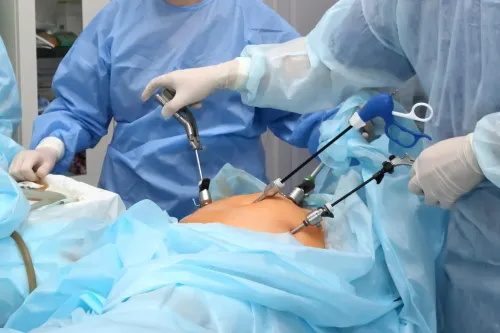
A drain is not automatic; the surgeon places one when bleeding, dead space or fluid collection makes it helpful. This is different from routine laparoscopic surgery for an adult scrotal hydrocele. In children, a communicating hydrocele usually needs closure through a groin incision or, in selected settings, laparoscopy, while a non-communicating hydrocele may be observed.
Ask exactly which operation is proposed when comparing hydrocele surgery in Baner.
What should you expect after surgery, and how should you choose a surgeon in Baner?
Bruising, swelling and tenderness can last several weeks after hydrocele treatment surgery in Baner. Wear scrotal support, take prescribed pain relief, keep the wound as instructed, arrange transport home, and avoid strenuous activity until your surgeon clears you. The incision may look healed before the final scrotal shape settles.
Recognised complications include bleeding or a scrotal haematoma, infection, persistent pain, recurrence, injury to the testis or its blood supply, chronic swelling and altered sensation. A haematoma can take weeks to resolve and become more troublesome than the original swelling.
| Sign | What it may indicate | Action |
|---|---|---|
| Routine bruising and tenderness | Expected healing | Follow wound and activity instructions |
| Rapidly increasing swelling, fever, severe pain, wound discharge or difficulty urinating | Possible complication | Seek urgent medical review |
Take these questions to your consultation:
- Did ultrasound confirm the diagnosis, and was Doppler used if needed?
- Is there an inguinal hernia or communicating tract?
- Which technique is planned: standard scrotal hydrocelectomy, Lord plication, Jaboulay eversion, or repair through the groin?
- What anaesthesia, fasting instructions, medication changes and day-care arrangements apply?
- What are your recurrence and complication rates, and who handles follow-up?
Dr. Shaunak Saha can be one local point of discussion when comparing a hydrocele surgeon in Baner, provided the consultation answers these questions rather than relying on the word “laparoscopic.” Laparoscopy is not routine for an uncomplicated adult scrotal hydrocele.
Related service
Scrotal Surgery Hydrocele Treatment and Surgery A hydrocele is a collection of fluid around a testicle that can cause swelling of the scrotum. View service → |
Frequently asked questions
Could scrotal swelling be something other than a hydrocele?
Yes. A hernia, varicocele, epididymal cyst, infection, trauma or testicular tumour can also cause swelling. Examination and, when needed, ultrasound help distinguish them.
How is a hydrocele confirmed before treatment?
A clinician examines the scrotum, checks whether light passes through the swelling, and assesses the testicle and groin. Ultrasound is used when the examination is uncertain or the testicle cannot be felt clearly.
When is observation better than aspiration or surgery?
Observation can suit a small, painless hydrocele that is stable and has no concerning examination findings. Aspiration often provides temporary relief because fluid can return, while surgery is considered for persistent discomfort, enlargement or functional problems.
What happens during hydrocele surgery?
The surgeon makes an incision, drains the fluid, and removes or folds the hydrocele sac to reduce recurrence. You receive anaesthesia, and the surgeon will explain the expected wound care, activity limits and follow-up.
Keywords