
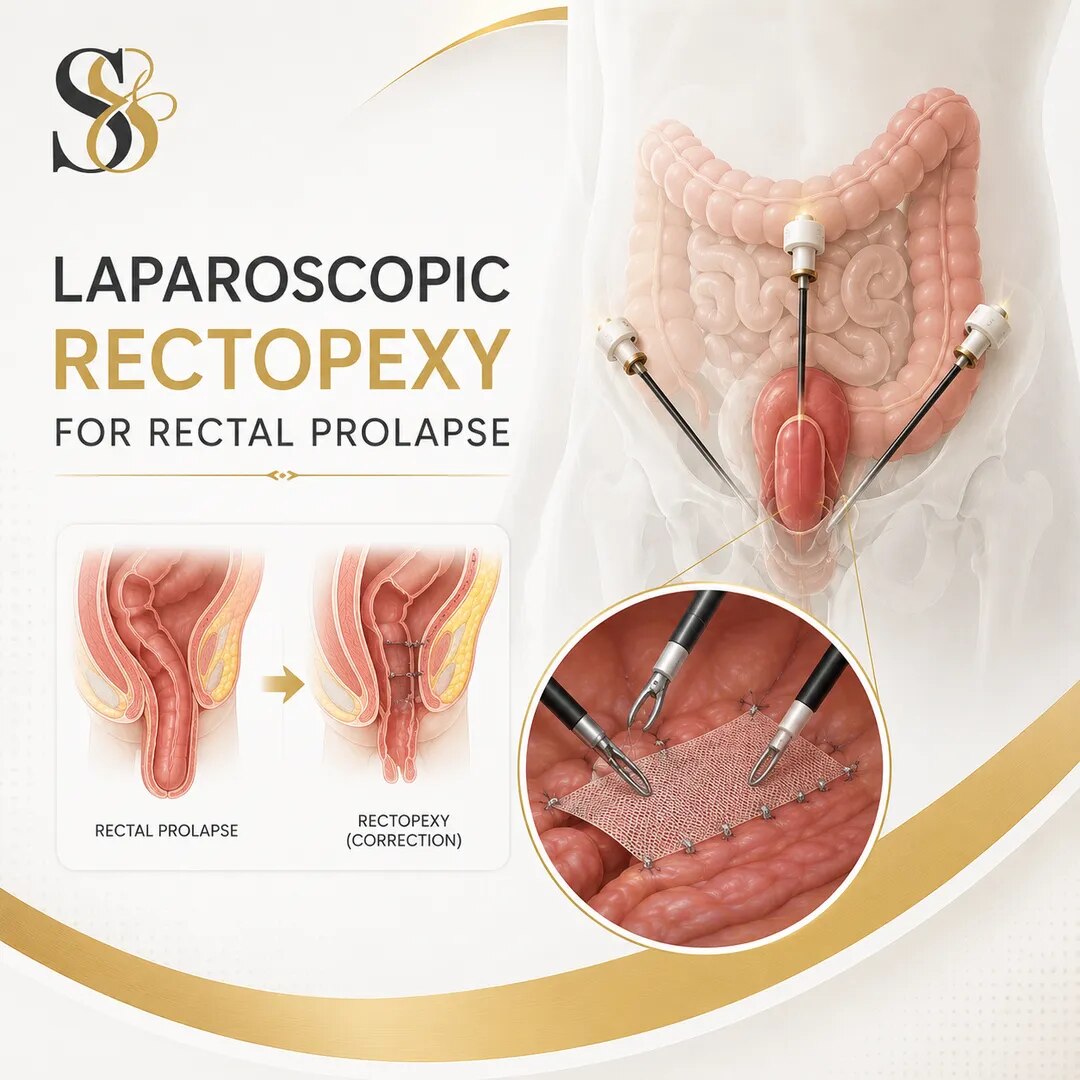
Laparoscopic Rectopexy for Rectal Prolapse
Description
Laparoscopic rectopexy is a surgical procedure used to treat rectal prolapse by restoring the rectum to a more appropriate position and securing it within the pelvis. Rectal prolapse occurs when the rectum stretches and protrudes through the anus. Symptoms can include a visible bulge, difficulty with bowel movements, constipation, mucus or bleeding and bowel-control problems.
Dr Shaunak Saha provides clinical evaluation for patients experiencing symptoms suggestive of rectal prolapse. Assessment may include physical examination and, where appropriate, investigations such as colonoscopy, anorectal testing or imaging.
The choice of rectal prolapse operation depends on factors including the extent of prolapse, age, general health, bowel function and associated pelvic conditions.
SPECIFICATIONS:
Procedure: Laparoscopic rectopexy
Condition: Rectal prolapse
Surgical field: Rectum and pelvis
Approach: Laparoscopic abdominal surgery
Assessment: Clinical and appropriate diagnostic evaluation
Objective: Restore and secure the rectum
Possible technique: Suture or mesh-supported fixation depending on case
Anaesthesia: Usually general or regional anaesthesia depending on procedure
Recovery: Individualised
Suitability: Determined after specialist assessment
FREQUENTLY ASKED QUESTIONS:
Q: What is rectal prolapse?
A: Rectal prolapse occurs when the rectum stretches and protrudes through the anus.
Q: Does rectal prolapse always require surgery?
A: Surgery is commonly required for complete rectal prolapse, although treatment depends on the individual condition.
Q: What is rectopexy?
A: Rectopexy is a surgical technique in which the rectum is repositioned and secured within the pelvis.
If you notice a bulge from the anus, difficulty passing stool or changes in bowel control, consult Dr Shaunak Saha for an appropriate evaluation.
Specifications
| Key property | Minimally invasive rectal prolapse repair |
|---|---|
| Treatment planning | Procedure selected according to individual patient factors |
| Clinical focus | Restoring the rectum to its appropriate position |
| Assessment | Evaluation of bowel function and associated pelvic conditions |
| Patient search intent | Treatment for rectal prolapse |