Laparoscopic Hernia Repair
Description
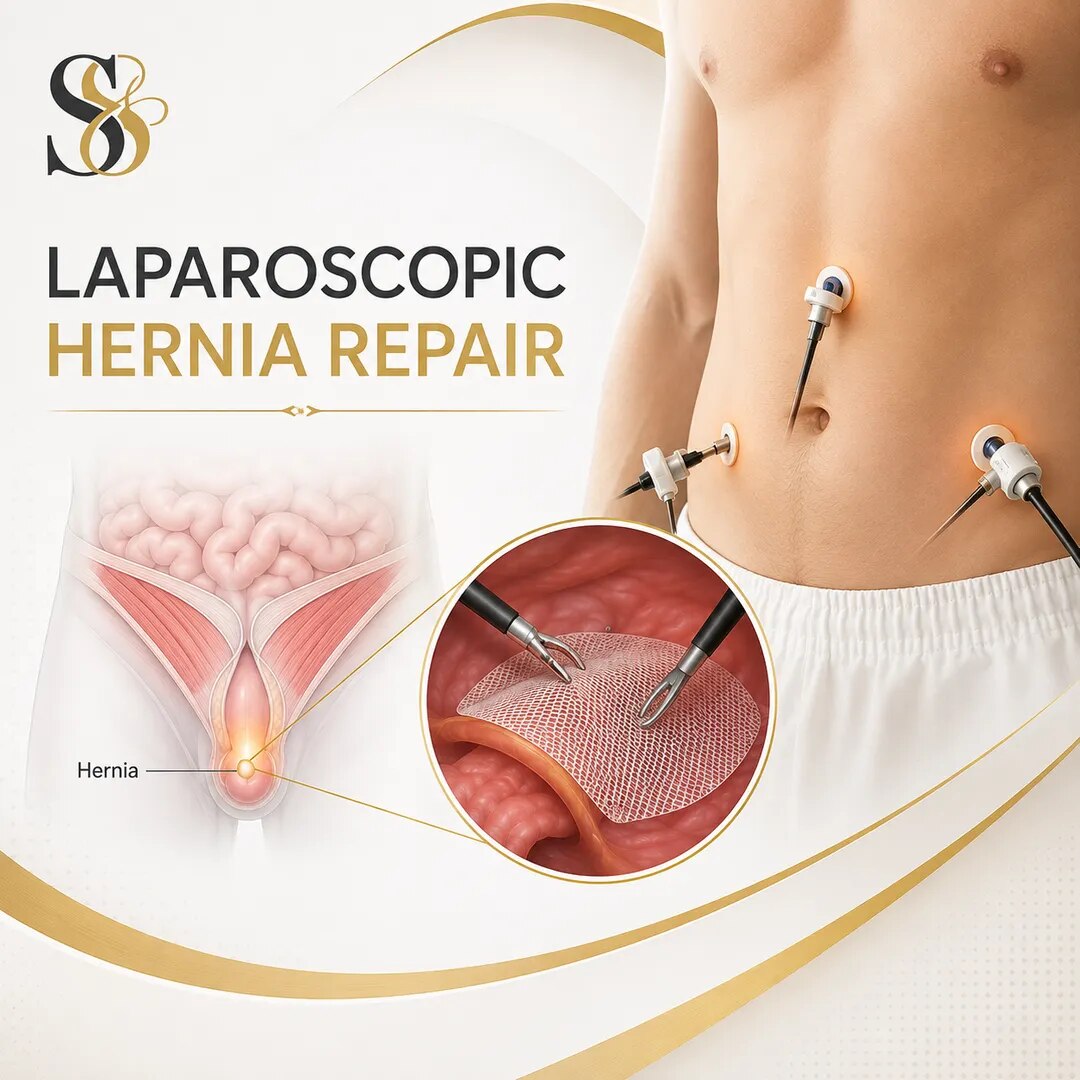
A hernia occurs when internal tissue pushes through a weak area in the surrounding muscle or abdominal wall, creating a bulge or swelling. Laparoscopic hernia repair uses small incisions, a camera and specialized instruments to repair the affected area.
Dr Shaunak Saha provides evaluation and surgical consultation for patients with suspected inguinal, abdominal or other suitable hernias. The choice between laparoscopic and open repair depends on the type and location of the hernia, previous surgery, symptoms, overall health and other clinical factors.
Depending on the hernia and surgical technique, reinforcement with surgical mesh may be considered. The appropriate repair method is determined after individual assessment.
SPECIFICATIONS:
Procedure: Laparoscopic hernia repair
Conditions: Inguinal and selected abdominal hernias
Approach: Minimally invasive keyhole surgery
Assessment: Clinical examination and imaging when required
Repair: Closure and reinforcement of the weakened area
Possible reinforcement: Surgical mesh where clinically indicated
Anaesthesia: Usually general anaesthesia
Incisions: Small abdominal incisions
Recovery: Individualised according to procedure and patient health
Suitability: Determined by the surgeon
FREQUENTLY ASKED QUESTIONS:
Q: What are common signs of a hernia?
A: A visible or palpable bulge in the groin or abdomen, discomfort or pain, particularly with coughing, lifting or straining, can occur.
Q: Does a hernia go away on its own?
A: A true abdominal wall hernia generally does not repair itself. Surgical treatment may be recommended depending on symptoms, type and risk.
Q: Is laparoscopic hernia surgery suitable for everyone?
A: No. The appropriate technique depends on the type of hernia, previous operations, health status and surgical assessment.
Have a persistent groin or abdominal bulge evaluated by Dr Shaunak Saha and discuss the most appropriate hernia treatment for your condition.
Specifications
| General Surgeon | Minimally invasive hernia repair |
|---|---|
| Clinical focus | Repair of the underlying abdominal wall weakness |
| Approach | Laparoscopic or appropriate surgical repair based on individual assessment |
| Patient benefit | Small surgical access in suitable cases |
| Patient search intent | Treatment for groin or abdominal swelling |