A painful lump or draining opening near the buttock crease does not identify its cause by itself. You will learn how clinicians confirm pilonidal disease, distinguish it from similar conditions, choose between drainage and definitive procedures, and plan recovery around wound care and follow-up in Pune.
Key takeaways
- Seek urgent assessment for severe pain, spreading redness, fever or a growing abscess.
- Ask how the proposed operation affects wound care, time off work and recurrence risk.
- Keep the wound clean and dry, and follow dressing instructions after surgery.
- Return for review if drainage, swelling, pain or new midline pits reappear.
How is pilonidal disease diagnosed and separated from similar lumps?
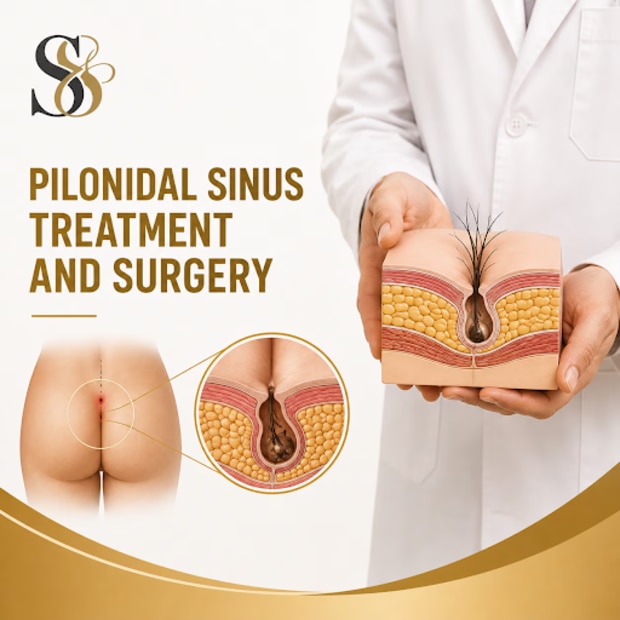
Pilonidal sinus diagnosis usually comes from a physical examination while you lie on your side or stomach. The clinician checks for midline pits, visible hair, redness, swelling, tenderness, a fluctuant abscess and lateral openings that indicate branching tracts. They will ask about previous drainage, recurrent swelling, persistent discharge and earlier operations.
When the pits and abscess look typical, routine blood tests, ultrasound and MRI are unnecessary. Ultrasound helps locate a fluid collection when the lump is deep or the examination is uncertain.
An MRI scan for pilonidal sinus disease is useful for extensive or recurrent disease, disease close to the anus, suspected fistula, or possible hidradenitis suppurativa.
Ask which finding supports the diagnosis before agreeing to a procedure. Similar lumps have different clues:
- A perianal abscess sits beside the anus and causes severe, throbbing pain.
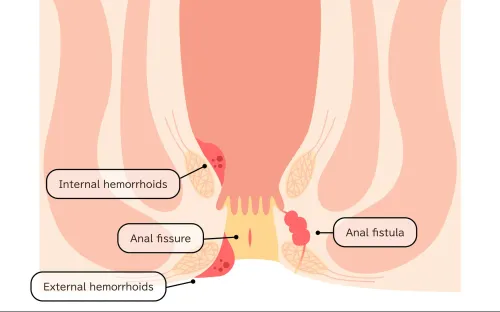
- An anal fistula has an external opening connected to the anal canal and may repeatedly discharge.
- An infected epidermoid cyst is usually one round lump, not several midline pits.
- Hidradenitis suppurativa causes repeated nodules, tunnels and scars in the groin, armpits or buttocks.
- An ordinary boil is a short-lived infected hair follicle without characteristic sinus openings.
A new pit, swelling, increasing pain, fever or persistent drainage warrants reassessment rather than an assumption that it is normal healing.
What should you do during a painful flare or abscess?
A painful, fluctuant swelling needs prompt clinical assessment because pilonidal abscess drainage usually requires incision and drainage. The clinician releases pus and leaves a route for continued drainage; this relieves pressure but may not remove the sinus tract.
1. Keep the cleft gently clean. Rinse away sweat and discharge, then pat the skin completely dry. Wear loose clothing and avoid prolonged sitting or direct pressure on the sore area.
2. Use paracetamol for pilonidal sinus pain relief if you can take it safely. Follow the dose on the pack, and ask a pharmacist first if you have liver disease, drink heavily or take other medicines. Check before using ibuprofen if you have a stomach ulcer, kidney disease, take blood-thinning treatment or are pregnant.
3. Do not squeeze, lance or insert objects into the swelling. Antibiotics for pilonidal infection do not replace drainage; they become relevant when redness spreads beyond the collection, cellulitis, fever, systemic illness or another specific indication is present.
4. Seek urgent assessment for fever, rapidly spreading redness, worsening pain, faintness, inability to sit or walk normally, or uncontrolled drainage. These signs help show when pilonidal sinus needs urgent treatment.
After acute inflammation settles, discuss observation versus definitive treatment. Persistent pits, ongoing discharge or repeated abscesses can mean the underlying sinus remains even after the opening closes.
Which operation offers the right trade-off between healing and recurrence?
No single operation wins for everyone: the best trade-off depends on disease extent, recurrence history and how much wound care you can manage. Observation suits an asymptomatic sinus or limited disease without repeated infection. Hygiene, moisture control and a suitable hair-management plan can reduce irritation, but they do not cure an established abscess.
Among pilonidal sinus surgery options, off-midline closure pilonidal sinus surgery usually offers better wound conditions than a scar placed inside the cleft.
| Option | Main advantage | Main cost or limitation |
|---|---|---|
| Observation | Avoids an operation | Does not treat persistent drainage or repeated infection |
| Open healing | No stitch line in the cleft | Frequent dressings and slower wound closure |
| Midline closure | Smaller wound and faster initial closure | Deep, moist scar has higher breakdown and recurrence concerns |
| Karydakis, Bascom cleft lift or Limberg flap | Moves the scar away from the cleft and covers the excision | More planning, tissue movement and recovery restrictions |
| Pit-picking, EPSiT or VAAPS | Smaller access wounds and quicker early recovery | Less suitable for branching, extensive or repeatedly recurrent disease |
Open healing leaves the excision wound unsutured. Midline closure may close sooner, but many contemporary guidelines discourage it because friction and moisture stress the scar.
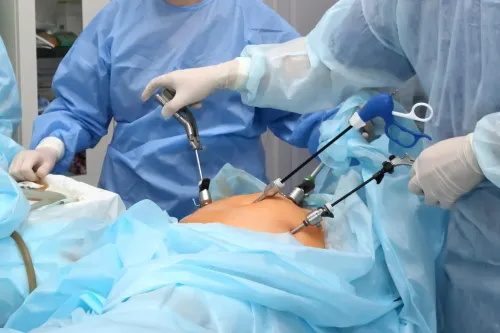
Pit-picking fits patients with few midline pits and little lateral disease. EPSiT and VAAPS use a camera through the skin to remove hair and inflammatory tissue; they are not abdominal laparoscopy. Their long-term evidence is less mature than flap surgery. Ask what a laser technique actually involves before choosing it.
How does a surgeon match the procedure to your disease and recovery plan?
The match begins with one question: is an abscess active? Drainage usually comes first; definitive surgery follows after inflammation settles, when the surgeon can assess the underlying sinus accurately.
- Map the disease: count and locate midline pits, lateral openings and branching tracts. Review previous operations, wound infection, scar tissue and the number of recurrences.
- Match the extent: observation, pit-picking or endoscopic treatment may suit a small first-time sinus with few pits and limited lateral disease. A broad, branching or recurrent sinus, especially after failed limited surgery, may favour an off-midline flap.
- Match the recovery plan: open healing requires regular cleaning and dressing visits; a flap requires wound checks, pressure protection and temporary limits on sitting, exercise and heavy work.
- Confirm the practical details: ask how many dressings you will need, who will review the wound, when you can sit, drive, work and exercise, and what happens if the wound opens.
A minimally invasive procedure removes less tissue, but it is not automatically appropriate or recurrence-proof. EPSiT recovery may be relatively quick, while Karydakis flap recovery or open healing can require longer wound care; there is no universal pilonidal surgery recovery time.
For pilonidal sinus treatment in Pune, plan follow-up around transport, work and dressing support in Baner or elsewhere. Dr. Shaunak Saha can clarify whether “laparoscopic” means EPSiT or another endoscopic skin procedure, not abdominal laparoscopy. Judge recovery by pain, sitting tolerance, drainage and wound progress.
How can you protect the wound and recognise recurrence?
Follow the written pilonidal sinus wound care instructions. Do not apply powders, antiseptics or creams unless they were prescribed. Keep the cleft dry, change damp clothing promptly and avoid pressure until your surgeon confirms that sitting and exercise are safe.
A small amount of drainage can occur during healing. Increasing pain, new swelling, foul discharge, wound separation, fever or spreading redness are pilonidal surgery warning signs that need reassessment; do not assume every new symptom is normal healing.
After the wound heals, ask which hair-control method suits your skin and operation.
| Method | Benefit | Limitation |
|---|---|---|
| Shaving | Removes surface hair without repeated clinic sessions | Can irritate skin and cause ingrown hairs |
| Laser hair reduction | May lower recurrence for some patients | Requires repeated sessions; cost, access and skin type matter |
| No hair removal plan | Avoids treatment-related irritation | Does not address hair entering a persistent sinus |
To prevent pilonidal sinus recurrence, remember that hair control supports treatment but cannot replace drainage of an abscess or removal of a persistent sinus. Recurrence remains possible after open healing, limited procedures, flap surgery or an apparently healed wound, especially with extensive disease, a deep cleft, a midline scar or failed previous procedures.
Arrange review for a new pit, recurrent drainage, swelling or pain rather than waiting for another abscess. Keep your follow-up plan, requested wound photographs and operation details for any future clinician.
Frequently asked questions
How is pilonidal disease diagnosed and separated from similar lumps?
A clinician examines the cleft for midline pits, hair, redness, swelling, tenderness, fluctuation and lateral openings, then asks about previous drainage, discharge and operations. Other lumps require separate assessment.
What should you do during a painful pilonidal abscess flare?
Arrange prompt medical assessment, especially when pain, swelling, redness or fever is increasing. Do not squeeze or puncture the lump; an abscess may need drainage before definitive treatment.
Which operation offers the right trade-off between healing and recurrence?
The choice depends on whether disease is limited or recurrent, the number and position of tracts, previous surgery and the wound-care plan. Discuss healing time, recurrence risk and time away from work rather than choosing by procedure name alone.
How can you protect the wound and recognise recurrence?
Follow dressing and washing instructions, avoid pressure and friction during healing, and attend scheduled reviews. Report renewed pain, swelling, discharge, bleeding or new pits promptly.