
A lump that looks minor can represent an abscess, hernia, cyst, enlarged lymph node, blood collection, or a deeper tumour, so treatment should follow an examination rather than guesswork. You will learn how to judge urgency, prepare for swelling evaluation in Pune, compare tests and treatments, and choose the right clinical pathway for the lump’s location.
Key takeaways
- Seek emergency care for a painful, irreducible lump with vomiting or bowel blockage.
- Record a lump’s size, location, pain, skin changes, and growth before your appointment.
- Ultrasound often guides whether observation, drainage, biopsy, or excision is appropriate.
- Choose a general surgeon experienced with the affected body site and planned procedure.
When a Lump Needs Emergency, Same-Day, or Routine Care
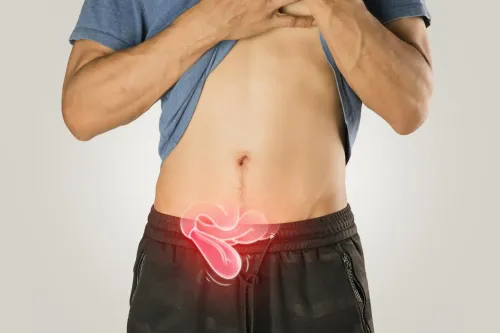
A new lump needs emergency care when it threatens blood flow, bowel function, or your general condition. Do not wait for a routine appointment if a groin or abdominal swelling becomes painful, cannot be pushed back, and is accompanied by vomiting, abdominal distension, or inability to pass stool or gas.
Use this triage guide:
- Emergency care now: faintness, severe or rapidly worsening pain, skin turning dusky or black, heavy bleeding, or a trapped hernia with vomiting or inability to pass gas.
- Same-day medical assessment: a tender lump with fever, warmth, pus, rapidly spreading redness, skin breakdown, or severe swelling. Arrange same-day review if you are immunocompromised, because an infection can worsen quickly.
- Prompt appointment: a lump that grows rapidly, feels hard or fixed, measures about 5 centimetres or more, persists, returns, or occurs with unexplained weight loss. Do not assume it is a lipoma.
- Routine appointment: a small, stable, painless lump without warning signs still deserves examination, particularly if it remains beyond two weeks.
Do not squeeze, repeatedly needle, or cut an unexplained lump. You can cause bleeding, spread infection, and make diagnosis harder. A suspected soft-tissue tumour needs imaging and planned biopsy before definitive removal; casual excision can complicate later treatment.
When arranging swelling evaluation in Pune or lump treatment in Pune, choose the urgency above rather than treating every bump as a cosmetic problem.
How to Record a Lump and What the Clinician Examines
Before the appointment, record the lump while it is present: its exact body site, size in centimetres, date first noticed, and whether it has grown, returned, or changed. Note pain, tenderness, firmness, mobility, skin colour or breakdown, discharge, fever, weight loss, and bowel or urinary symptoms.
- Photograph the swelling beside a ruler, using the same angle and lighting if you track changes.
- Note whether it becomes larger when you stand, cough, strain, or eat, and whether it reduces when you lie down.
- Write down previous injuries, operations, injections, infections, cancer history, medicines, and relevant family history.
- Bring scan reports, pathology results, and a list of medicines. Do not squeeze, repeatedly needle, or cut the lump; this can cause bleeding, infection, and confusing examination findings.
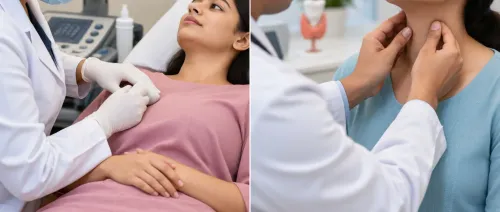
During swelling evaluation in Pune, a clinician first asks when the lump appeared, how it changed, and which symptoms accompany it. They inspect its location, size, shape, skin, and visible openings, then palpate for tenderness, warmth, consistency, movement, and attachment to deeper tissue.
They may examine you standing and lying down, test a suspected hernia with coughing, and feel nearby lymph nodes. The findings determine whether you need observation, imaging, sampling, or treatment.
Ultrasound, Biopsy, Drainage, or Excision: Which Test Comes Next?
Doctors choose the next step from the lump’s location, depth, size, growth pattern, and examination findings—not from whether it looks like an ordinary bump. Ultrasound often suits a superficial lump or suspected hernia; MRI gives better detail for a deep or indeterminate soft-tissue mass.
| Option | What it means | When it applies |
|---|---|---|
| Ultrasound or MRI | Imaging, not removal | Ultrasound for superficial lesions; MRI for deep or unclear masses |
| Needle aspiration | A thin needle removes fluid or cells for testing | A fluid-filled cyst, abscess, or selected lymph node |
| Core-needle biopsy | A larger needle removes tissue for laboratory diagnosis | A solid or suspicious lump requiring histology |
| Drainage | An opening or needle empties pus, blood, or other fluid | An abscess or symptomatic collection; it does not remove the capsule |
| Excision | Surgery removes the entire lump, often with its capsule | A confirmed benign lesion, recurrent cyst, or lesion needing complete removal |
Do not squeeze, repeatedly needle, or cut an unexplained lump at home: infection, bleeding, and a harder-to-interpret specimen can follow. A lump suspected to be a soft-tissue sarcoma needs planned imaging and biopsy before definitive surgery; casual excision can contaminate tissue planes and complicate specialist treatment.
Ask what diagnosis is suspected before choosing lump treatment in Pune or bump treatment in Pune, and whether pathology will examine anything removed.
Treatment Choices, Safe Observation, and Mistakes to Avoid
Observation is suitable only after examination supports a benign, stable diagnosis such as a small lipoma or uncomplicated cyst. Arrange review if it grows, becomes painful, fixed, red, ulcerated, or returns; a suspected soft-tissue sarcoma needs imaging and planned biopsy before removal.
| Option | What it does | When it applies |
|---|---|---|
| Observation | Monitors size, symptoms, and skin changes | Benign-appearing, stable lumps with a documented follow-up plan |
| Antibiotics | Treats bacterial infection, not a solid lump or sealed pus collection | Cellulitis, fever, extensive redness, systemic illness, or higher-risk immunity |
| Drainage | Releases pus or fluid through a procedure | Abscesses; antibiotics alone often leave the collection untreated |
| Steroid injection | Reduces inflammation or excessive scar tissue | Selected keloids or inflammatory lesions after diagnosis; not an unexplained lump |
| Excision | Removes the lesion for treatment and pathology | Symptomatic, recurrent, enlarging, uncertain, or confirmed removable lesions |
For lump treatment in Pune, do not squeeze, repeatedly needle, or cut an unexplained swelling at home. You can cause bleeding, spread infection, and distort later examination or biopsy. A repeatedly inflamed cyst often needs complete excision after the acute infection settles.
Bump treatment in Pune is not automatically laparoscopic: the diagnosis, size, site, previous operations, anaesthetic fitness, and need for cancer-appropriate margins determine the approach. A planned open operation can be safer than an unsuitable minimally invasive removal.
Different Body Sites Need Different Specialists and Tests
The lump’s location determines who examines it and which test can answer the question. During swelling evaluation in Pune, a general surgeon may coordinate referrals, but do not assume every lump needs surgery.
- Breast: See a breast surgeon or general surgeon. Assessment may combine examination, targeted ultrasound, mammography, and a core-needle biopsy for a solid or suspicious lesion.
- Thyroid: An endocrinologist or head-and-neck surgeon reviews thyroid function tests and a neck ultrasound. Fine-needle aspiration checks nodules with suspicious ultrasound features.
- Parotid: An ENT or head-and-neck surgeon assesses swelling near the ear or jaw. Ultrasound with needle sampling is common; MRI helps map deep or indeterminate masses.
- Scrotal: A urologist uses examination and Doppler ultrasound to distinguish testicular, epididymal, fluid-filled, or vascular causes. Sudden severe pain needs emergency assessment.
- Anorectal: A colorectal or general surgeon may perform inspection, digital rectal examination, and anoscopy. A painful, red swelling with fever can require urgent drainage.
- Abdominal wall: A general surgeon examines for a hernia; ultrasound helps when findings are unclear, while CT or MRI may assess complex or deep masses.
- Skin: A dermatologist, plastic surgeon, or general surgeon may use dermoscopy, punch biopsy, or complete excision, with pathology identifying the lesion.
When choosing a general surgeon for lumps in Pune, ask who will examine you, whether pathology is planned, and which specialist receives an unexpected result.
Choosing a Lump Surgeon in Pune and Planning the Treatment Journey
A good general surgeon for lumps in Pune should offer a clear diagnostic plan, not simply promise quick removal. Check registration with the National Medical Commission or Maharashtra Medical Council, clinic access in Baner, and the hospital where surgery, anaesthesia, observation, and emergency support would occur.
| Clinic access | Convenient Baner appointments, follow-up, and imaging coordination | Useful when wound reviews or repeat assessment are likely |
|---|---|---|
| Hospital care | Named hospital, operating doctor, anaesthetist, and overnight plan | Important for large, deep, infected, or medically complex lumps |
| Pathology | Removed tissue sent for histopathology and results communicated by a stated method | Essential when diagnosis is uncertain or the lesion is excised |
| Recovery and cost | Written estimate covering consultation, imaging, biopsy, surgery, pathology, medicines, dressings, and reviews | Prevents a low initial quote from hiding later charges |
Ask who will perform the operation, whether ultrasound, MRI, or biopsy comes first, and what happens if pathology gives an unexpected result. A rapidly enlarging, hard, deep, or fixed mass needs planned imaging and biopsy before removal; casual excision of a possible soft-tissue sarcoma can complicate later treatment.
For lump treatment in Pune or bump treatment in Pune, compare expected downtime, wound care, recurrence risk, and work restrictions. Dr. Shaunak Saha can discuss these choices alongside the diagnosis and referral plan when specialist input is needed.
Related services
General Surgery Lumps and bumps can have many causes, including sebaceous or epidermoid cysts, lipomas, ganglion cysts and other benign or more serious conditions. View service → |
Breast and Endocrine Surgery Breast and Thyroid Swellings Evaluation and Surgical Treatment Breast and thyroid swellings can have many causes, ranging from benign conditions to conditions requiring further investigation or treatment. View service → |
Frequently asked questions
When does a lump need emergency or same-day care?
Seek emergency care for a painful groin or abdominal lump that cannot be pushed back with vomiting, abdominal swelling, or inability to pass stool or gas. Arrange same-day assessment for rapid growth, severe pain, redness with fever, bleeding, or sudden testicular swelling.
What should I record before a lump evaluation in Pune?
Note when the lump appeared, its location, approximate size, growth, pain, movement, skin changes, discharge, fever, and whether coughing or standing changes it. Bring previous scan reports and medication details.
Will I need an ultrasound, biopsy, drainage, or excision?
The examination determines the next step. Ultrasound can distinguish fluid-filled from solid or hernia-related swellings; drainage treats selected collections, biopsy samples suspicious tissue, and excision removes suitable lumps for treatment and diagnosis.
Can every lump be safely observed?
No. Observation fits selected stable, low-risk lumps after clinical assessment. Do not squeeze, puncture, massage, or repeatedly press a lump, and seek review if it grows, becomes painful, changes the skin, or causes functional symptoms.
How do I choose a lump surgeon in Pune?
Ask which diagnosis is suspected, whether ultrasound or pathology is needed, what procedure is proposed, its risks, recovery plan, and what happens if the lump recurs. Choose a general surgeon whose experience matches the lump’s body site.
Related services
Head and Neck Surgery Parotid Swellings Diagnosis and Surgical Treatment The parotid glands are major salivary glands located in front of the ears. View service → |
General Surgery Pilonidal Sinus Treatment and Surgery Pilonidal sinus is a condition affecting the cleft between the buttocks and can cause a painful swelling, drainage or recurrent infection. View service → |
Scrotal Surgery Hydrocele Treatment and Surgery A hydrocele is a collection of fluid around a testicle that can cause swelling of the scrotum. View service → |
Anorectal Surgery Anorectal Disorders – Fissure, Fistula, Hemorrhoids, Pilonidal Sinus & Abscess Anorectal disorders affect the anus, rectum and surrounding tissues and can cause pain, bleeding, swelling, itching, discharge and difficulty with... View service → |
Keywords