
Severe abdominal symptoms can require emergency treatment, while recurring pain, a new lump or persistent digestive change may need a planned specialist assessment. By the end, you will know which warning signs cannot wait, which clinician to contact and what a surgical consultation can—and cannot—decide.
Key takeaways
- Seek emergency care for worsening pain, fainting, confusion, clammy skin, or a rigid abdomen.
- Match persistent or recurring symptoms with a general surgeon, gastroenterologist, or emergency clinician.
- A surgical consultation assesses your options and does not commit you to an operation.
- Bring symptom details, medication lists, scans, and previous surgery records to your appointment.
Go to emergency care when abdominal symptoms signal danger
Severe abdominal pain needs emergency assessment when it is worsening, sudden, or accompanied by fainting and confusion, cold or clammy skin, or a rigid abdomen. Do not wait for a routine surgical appointment: these signs can indicate shock, peritonitis, bleeding, or another time-critical problem.
| Symptom pattern | Action | Why it matters |
|---|---|---|
| Severe pain with repeated vomiting, progressive swelling, and inability to pass stool or gas | Go to an emergency department | This pattern suggests bowel obstruction, which may require intravenous fluids, bowel decompression, CT, or surgery |
| Blood in vomit, black stools, or bright-red bloody stools | Seek emergency care now | Gastrointestinal bleeding can become dangerous quickly |
| Fever with abdominal pain, jaundice, or pain in the right upper abdomen lasting several hours | Seek urgent assessment | Gallbladder infection, bile-duct blockage, or pancreatitis needs prompt evaluation |
| A painful hernia bulge that cannot be pushed back | Go to an emergency department | Trapped bowel can lose its blood supply |
| Fainting, confusion, marked weakness, or cold clammy skin | Call emergency services | These can signal shock |
After abdominal or laparoscopic surgery, contact the surgical team urgently for increasing pain, fever, repeated vomiting, jaundice, shortness of breath, chest pain, worsening incision redness or drainage, or a new painful swelling. Mild bruising and limited soreness alone are common early findings.
Match the symptom pattern to the right clinician
Choose the clinician by pattern, but let severity override the referral. Sudden or worsening pain, a rigid abdomen, repeated vomiting, fainting, black or bloody stools, fever with pain, or inability to pass stool or gas requires emergency care. Pain after an injury needs same-day assessment, especially with tenderness, dizziness or increasing swelling.
| Clinician | Pattern that fits | What to do |
|---|---|---|
| General surgeon | Groin or abdominal-wall swelling, a suspected hernia, right-lower-quadrant pain, or right-upper-quadrant pain after meals | Arrange surgical assessment; seek urgent care for severe pain, fever, vomiting, jaundice or a trapped bulge |
| Gastroenterologist | Persistent bloating, recurrent upper-abdominal discomfort, reflux, diarrhoea or constipation without emergency signs | Book a digestive-system evaluation, particularly when symptoms persist or recur |
| Gynaecologist | Pelvic or lower-abdominal pain linked to periods, vaginal bleeding, discharge, pain during sex or possible pregnancy | Arrange gynaecological assessment; pregnancy with pain or bleeding needs urgent advice |
| Primary-care doctor | Mild, diffuse or unclear pain, medication-related symptoms, or symptoms involving several body systems | Start with a general assessment and referral if examination suggests a specialist problem |
Right-lower-quadrant pain does not prove appendicitis, and persistent bloating does not prove a surgical condition. Examination and targeted tests can separate bowel, urinary, gynaecological, abdominal-wall and surgical causes. A general surgeon may recommend observation, medical treatment or further testing instead of an operation.
A surgical consultation is an assessment, not a commitment to operate
A surgical consultation is an assessment, not a promise to operate. The surgeon clarifies when symptoms began, where they occur, what worsens them, and whether vomiting, fever, bowel changes, urinary symptoms, previous operations, medicines or pregnancy could affect the diagnosis.
1. Review your history. The surgeon asks about pain timing, appetite, weight loss, bowel movements, urine, previous illnesses and operations, then checks whether the pattern fits a surgical problem.
2. Perform an examination. They may inspect and feel the abdomen, check for guarding, a hernia or mass, listen for bowel sounds, and examine the groin, skin or other affected area.
3. Choose targeted tests. Blood tests can show inflammation, infection, anaemia or organ stress. Urine testing can identify urinary causes and, when relevant, pregnancy. Ultrasound avoids radiation and is often chosen first for children or pregnancy; a CT scan provides more detailed images and is more accurate than ultrasound in many adults, but uses radiation.
Endoscopy, biopsy or observation may also be appropriate.
4. Compare non-operative treatment. Medication, dietary changes, fluids, treatment for infection, or review by another specialist may be safer when symptoms arise from reflux, functional bowel disorders, urinary disease, gynaecological conditions or abdominal-wall pain.
5. Explain an operation only when the diagnosis and benefit justify it. The discussion covers laparoscopic or open surgery, anaesthesia, recovery, complications and alternatives. You can ask questions and decide later.
Know which conditions need surgical review and which options may be non-operative
A surgical review is appropriate for a diagnosed hernia, recurrent gallbladder pain, appendicitis, bowel obstruction, an anorectal abscess or fistula, a suspicious breast lump, and enlarging neck or soft-tissue masses.
Persistent symptoms alone do not prove that laparoscopic surgery is needed: functional bowel disorders, ulcers, urinary or gynaecological disease, medication effects, and abdominal-wall pain can mimic surgical conditions.
| Condition | Possible non-operative approach | When surgery becomes more likely |
|---|---|---|
| Appendicitis | Antibiotics for selected adults with CT-confirmed uncomplicated disease | Perforation, abscess, peritonitis, recurrence, or treatment failure |
| Gallstones or pancreatitis complications | Observation, dietary changes, medicines, or endoscopic treatment for selected problems | Recurrent biliary pain, cholecystitis, gallstone pancreatitis, or bile-duct complications |
| Bowel obstruction | Intravenous fluids, monitoring, and a nasogastric tube to decompress the stomach | Strangulation, perforation, or failure of non-operative treatment |
| Anorectal disease | Fibre, fluids, stool-softening treatment, medicines, or office procedures | Persistent haemorrhoids, fissure, fistula, pilonidal disease, or an abscess |
| Breast, neck, or soft-tissue lump | Imaging, needle sampling, observation, or treatment of infection | Suspicious biopsy findings, growth, compression, or a confirmed tumour |
A breast lump, thyroid or neck mass, and unexplained abdominal mass need coordinated assessment with imaging, endoscopy, biopsy, or multidisciplinary review before removal is planned. An abscess often needs drainage, while antibiotics alone fail when pus is trapped.
The diagnosis, anatomy, test results, and your operative risk determine whether treatment is open surgery, laparoscopy, an endoscopic procedure, or no operation.
Prepare for the appointment and recognise problems after surgery
Bring a medication list with doses, allergies, anticoagulants, scan reports, blood-test results, and records from prior operations. Note when symptoms began, what triggers them, bowel and urine changes, fever readings, weight loss, and treatments you have tried.
- Write a short timeline: include the first episode, recurrence, worsening, and any emergency visits.
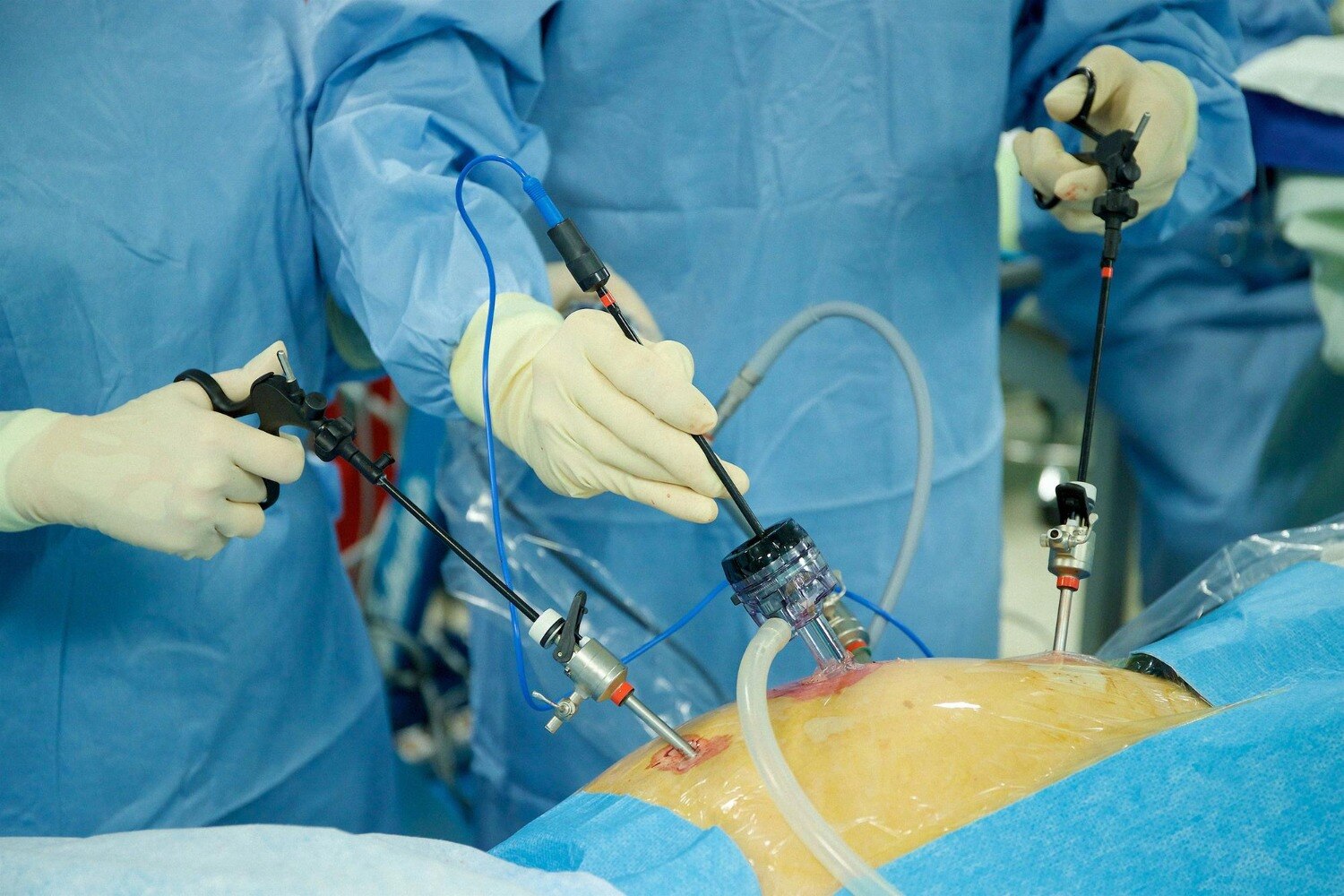
- Bring previous operation notes if available, especially for abdominal surgery; adhesions can affect port placement, entry technique, or the choice between laparoscopic and open surgery.
- List medical conditions such as diabetes, heart disease, pregnancy possibility, or bleeding disorders.
- Ask which diagnosis the examination supports, which tests are needed, and what non-operative options remain.
The surgeon will inspect scars, swelling, skin colour, and visible hernias, then feel the abdomen for tenderness, guarding, masses, or a rigid wall. Depending on your symptoms, the examination may include the groin, surgical site, breast, neck, or anorectal area.
Persistent pain does not automatically indicate an operation: peptic disease, urinary or gynaecological conditions, medication effects, functional bowel disorders, and abdominal-wall pain can require different testing or treatment. Dr. Shaunak Saha can use this assessment to decide whether surgical review or another medical evaluation is appropriate.
After surgery, contact the surgical team urgently for increasing pain, fever, spreading redness, pus-like drainage, repeated vomiting, jaundice, breathlessness, chest pain, or a new painful swelling. Small bruises and limited incision soreness can be normal early; worsening symptoms are postoperative warning signs that need prompt assessment.
Related services
Laparoscopic General Surgery Laparoscopic appendectomy is a minimally invasive operation to remove the appendix, most commonly when appendicitis requires surgical treatment. View service → |
Laparoscopic General Surgery A hernia occurs when internal tissue pushes through a weak area in the surrounding muscle or abdominal wall, creating a bulge or swelling. View service → |
Frequently asked questions
When should abdominal symptoms be treated as an emergency?
Seek emergency care for worsening or sudden severe pain, fainting, confusion, cold or clammy skin, or a rigid abdomen. These signs can indicate shock, peritonitis, bleeding, or another time-critical problem.
Which clinician should you consult for abdominal symptoms?
Use the symptom pattern and urgency as a guide. Emergency clinicians assess dangerous or rapidly worsening symptoms, while a general or laparoscopic surgeon reviews conditions that may need surgical treatment. A gastroenterologist may assess digestive problems that do not appear surgical.
Does seeing a surgeon mean I need an operation?
No. A surgical consultation is an assessment. The surgeon reviews your symptoms, examination findings, scans, and treatment choices before recommending surgery, observation, medication, or another option.
How should you prepare for a surgical consultation?
Bring a symptom timeline, medication and allergy list, previous operation records, scan or test reports, and your questions. Mention changes after surgery, including fever, worsening pain, vomiting, wound redness, discharge, or swelling.
Related services
Laparoscopic General Surgery Laparoscopic cholecystectomy is a minimally invasive surgical procedure used to remove the gallbladder, most commonly when gallstones cause recurrent... View service → |
Abdominal Surgery Laparoscopic Liver Abscess Drainage and Treatment A liver abscess is a collection of infected fluid or pus within the liver. View service → |
Hernia Surgery Open hernia repair is a surgical procedure used to treat a hernia through an incision made directly over or near the affected area. View service → |
Laparoscopic General Surgery aparoscopic splenectomy is a minimally invasive surgical procedure to remove the spleen through small abdominal incisions. View service → |