
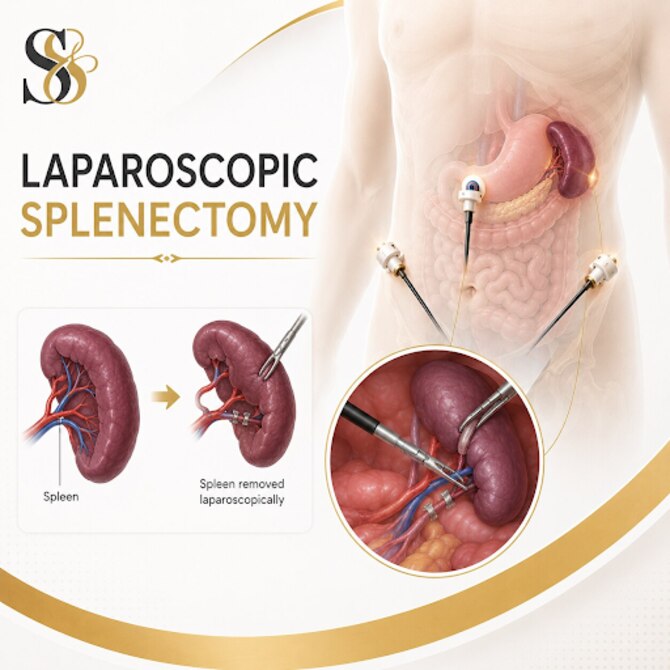
The spleen filters blood, supports antibody production, and helps remove certain bacteria, so its removal changes infection prevention for the rest of your life. You will learn why splenectomy is recommended, when laparoscopy is safe, what tests and medication changes are needed, and how to prepare for vaccination and postoperative warning signs.
Key takeaways
- Spleen removal increases infection risk from encapsulated bacteria.
- Emergency bleeding can require open splenectomy instead of laparoscopy.
- Ask your surgeon which vaccines you need before elective splenectomy.
- Seek urgent care for fever after splenectomy, especially with chills or weakness.
What changes when the spleen is removed?
The spleen’s function includes blood filtration: it removes ageing or abnormal blood cells and helps clear encapsulated bacteria from the bloodstream. It also supports the immune system by helping produce antibodies and coordinate immune cells.
Removing it does not usually prevent survival because other organs take over some functions, but protection against certain infections becomes weaker.
After splenectomy, the encapsulated bacteria infection risk after splenectomy remains increased for life, with the greatest danger often soon after surgery. Ask your treating team about keeping these vaccinations current:
- Pneumococcal vaccination
- Meningococcal vaccination
- Haemophilus influenzae type b vaccination
- Influenza vaccination every year
Complete the first three before planned surgery when possible, ideally at least 14 days beforehand. Emergency surgery must not be delayed solely for vaccination, and your schedule should follow your age and previous vaccine records.
Treat any fever or sudden febrile illness as an urgent medical problem, even after vaccination. Do not watch it at home: contact the emergency service or treating team immediately, because vaccination lowers the risk but cannot eliminate rapidly progressing sepsis.
Carry medical-alert information stating that you have no spleen, and follow any emergency-antibiotic plan prescribed for you.
Why might a planned or emergency splenectomy be necessary?
A planned splenectomy is scheduled after doctors assess the underlying disease, imaging, blood tests, and the risks of leaving the spleen in place. The aim may be to control abnormal blood-cell destruction, reduce symptoms, treat a lesion, or prevent a foreseeable complication.
Common planned indications include:
- Immune thrombocytopenia that has not responded adequately to medicines or relapses
- Hereditary spherocytosis surgery when ongoing red-cell destruction causes significant anaemia or other complications
- Thalassaemia-related enlargement causing pressure, pain, worsening anaemia, or transfusion problems
- A symptomatic splenic cyst or tumour
- A dangerously enlarged spleen with pain, pressure on nearby organs, blood-cell trapping, or a substantial rupture risk
- Spontaneous rupture after the patient has been stabilised, when preserving the spleen is unsafe or unsuccessful
Spleen size alone does not establish the indication. A large spleen can be monitored when symptoms, blood counts, imaging, and rupture risk do not justify removal.
An emergency splenectomy follows a different decision path. After blunt trauma, such as a road collision, or penetrating trauma from a stab or gunshot wound, surgeons act on internal bleeding, unstable blood pressure or heart rate, associated injuries, or a ruptured spleen that cannot be safely observed or repaired.
Resuscitation and rapid haemorrhage control take priority over the preparation possible for planned surgery.
How do surgeons choose between laparoscopy and open surgery?
Laparoscopic versus open splenectomy depends on the spleen, the disease, and your immediate safety—not on incision size alone. Surgeons weigh these factors before choosing an approach:
| Factor | Laparoscopy may fit | Open surgery is safer |
|---|---|---|
| Spleen size | Smaller spleen with room to handle it | Very large spleen that cannot be safely mobilised or removed |
| Suspected cancer | Clear anatomy and a suitable extraction plan | Need for wider access or concern about tumour handling |
| Previous operations | Limited adhesions | Dense adhesions that obscure organs and blood vessels |
| Bleeding risk | Controlled bleeding and stable vital signs | Uncontrolled haemorrhage or an unstable patient |
| Working space | Adequate abdominal space | Too little room for safe instrument movement |
| Anatomy | Splenic hilum is identifiable | Unclear anatomy or difficult hilar vessels |
| Associated injuries | No major additional injury | Trauma involving the stomach, colon, diaphragm, pancreas, or major blood vessels |
Conversion to open surgery is a safety decision, not automatically a complication. Surgeons convert when bleeding cannot be controlled, the splenic hilum cannot be identified, nearby organs are injured, or instruments cannot work safely. The pancreas lies beside the hilum and tail; injury can cause a pancreatic leak or fistula.
Accessory spleen tissue matters in immune thrombocytopenia and hereditary spherocytosis because leaving it behind can allow splenic function—and the underlying problem—to persist or recur. Dr. Shaunak Saha can discuss surgical suitability with patients seeking general and laparoscopic surgical care in Baner, Pune.
Related service
Laparoscopic General Surgery aparoscopic splenectomy is a minimally invasive surgical procedure to remove the spleen through small abdominal incisions. View service → |
What happens before elective laparoscopic spleen removal?
An elective splenectomy preoperative assessment confirms that surgery is safe and that the team understands your anatomy, blood counts, medicines, and infection risks.
- Complete a complete blood count, including platelet count, to identify anaemia, infection, and abnormal platelet levels.
- Arrange blood group and cross-match so compatible blood is available if bleeding occurs.
- Check coagulation tests and liver function tests before surgery.
- Have an abdominal ultrasound or contrast CT to assess spleen size, nearby organs, blood vessels, and any mass.
- Review every medicine, including aspirin, clopidogrel, warfarin, a direct oral anticoagulant, steroid, and diabetes medicine.
- Attend an anaesthesia assessment covering previous reactions, allergies, airway, heart and lung problems, fasting instructions, and pain control.
Never stop aspirin, clopidogrel, warfarin, a direct oral anticoagulant, steroid, or diabetes medicine without instructions from your treating team. The plan depends on bleeding risk, clot risk, kidney function, steroid dependence, and the operation date; stopping a medicine incorrectly can cause bleeding, thrombosis, adrenal problems, or uncontrolled glucose.
Complete pneumococcal, meningococcal, and Haemophilus influenzae type b vaccination ideally at least 14 days before elective surgery. Urgent surgery must not be delayed solely for vaccination. Your clinician should use your age and previous vaccine records to set the schedule, including meningococcal boosters when ongoing risk requires them, rather than automatically repeating every dose.
What should you monitor after splenectomy?
Use your discharge instructions as the recovery plan, including wound care, activity limits, breathing exercises, medicines, and follow-up appointments. Post-splenectomy care also requires lifelong attention to infection and clot symptoms.
1. Seek urgent medical assessment for heavy bleeding, faintness, worsening abdominal pain or swelling, a red or draining wound, persistent vomiting, inability to pass stool or gas, breathlessness, chest pain, or a painful swollen leg.
These symptoms can signal bleeding, wound or intra-abdominal infection, pneumonia, ileus, blood clots, or injury to the pancreas, stomach, colon, diaphragm, or blood vessels.
2. Treat fever after splenectomy or any acute febrile illness as an emergency; do not watch it at home. Vaccination lowers the risk but does not make post-splenectomy sepsis impossible. Follow your team’s emergency antibiotic plan, including using a supplied antibiotic only as instructed while obtaining immediate medical care.
3. Attend blood-count and clot-risk follow-up. Platelets often rise after spleen removal; marked reactive thrombocytosis and altered blood flow can contribute to portal vein thrombosis, splenic-vein thrombosis, or mesenteric thrombosis. Your monitoring and any preventive treatment depend on your platelet count, operation, bleeding risk, and other illnesses.
4. Keep pneumococcal, meningococcal, Haemophilus influenzae type b, and influenza vaccination records current. Carry medical-alert information stating that you have no spleen, and show it to every clinician, dentist, and emergency service.
Frequently asked questions
What changes when the spleen is removed?
The body loses an organ that filters ageing blood cells and helps clear encapsulated bacteria. Other immune organs take over some functions, but the risk of serious infection increases.
Why might a planned or emergency splenectomy be necessary?
A planned splenectomy can treat selected blood, immune, tumour, or spleen disorders. Emergency removal may be necessary after traumatic rupture or uncontrolled internal bleeding.
How do surgeons choose between laparoscopy and open surgery?
Surgeons consider bleeding, spleen size, the underlying condition, previous operations, the patient’s stability, and whether they need rapid access to the abdomen.
What happens before elective laparoscopic spleen removal?
The team reviews medicines and medical history, orders blood tests and imaging, plans vaccination timing, explains conversion to open surgery, and gives fasting instructions.
What should you monitor after splenectomy?
Monitor for fever, chills, worsening abdominal pain, vomiting, breathlessness, wound redness, bleeding, and unusual weakness. Fever after splenectomy needs prompt medical assessment.