A hernia that is enlarging, painful, difficult to push back, or interfering with walking and work deserves more than a decision based on the visible bulge. You will learn which symptoms require urgent assessment, how clinicians confirm the diagnosis, and when laparoscopic repair is a reasonable option compared with open repair or observation.
Key takeaways
- Seek urgent care for a firm, painful lump that cannot be pushed back.
- A surgeon combines examination with imaging when the diagnosis or cause is unclear.
- Laparoscopic repair is commonly considered for selected groin, recurrent, and bilateral hernias.
- Compare recovery, recurrence risk, mesh plans, anaesthesia, and surgeon experience before scheduling repair.
Which hernia symptoms require urgent assessment?
Seek urgent medical assessment for a sudden painful, firm lump that cannot be pushed back, especially when vomiting, abdominal swelling, or inability to pass stool or gas occurs. Do not schedule routine laparoscopic repair first: these findings can indicate an incarcerated hernia, strangulation, or bowel obstruction.
| Finding | More consistent with planned surgical review | Requires urgent assessment |
|---|---|---|
| Size and pain | A growing hernia, persistent pain, pain during lifting, or interference with walking or work | Sudden severe pain with a firm, tender lump |
| Reducibility | The bulge returns when you lie down or can be gently reduced | An irreducible hernia that stays trapped |
| Skin and bowel symptoms | No skin change and normal bowel function | Red, purple, or dark skin, fever, vomiting, abdominal distension, or inability to pass stool or gas |
Growth alone does not prove strangulation. A progressively enlarging or painful hernia is symptomatic, however, so a surgeon should examine it; elective repair becomes more likely and the operation can become technically harder as the defect enlarges.
A small femoral groin lump deserves particular attention because femoral hernias have a higher incarceration and strangulation risk than many uncomplicated male inguinal hernias. Do not assume that a small bulge is safe to observe. If the lump becomes acutely painful, firm, discoloured, or irreducible, seek emergency assessment rather than waiting for a routine appointment.
How does a surgeon confirm that the hernia is causing the problem?
A bulge alone cannot show whether the hernia is causing your pain or whether laparoscopic repair is appropriate. During a hernia examination, the surgeon checks you standing and lying down, asks you to cough or strain, identifies the lump’s location, and sees whether it reduces when you relax or lie down.
The surgeon also tests whether pressing or stressing the defect reproduces your reported pain.
| Method | What it clarifies | When it is useful |
|---|---|---|
| Physical examination | Reducibility, location, size, and symptom reproduction | First assessment of most suspected hernias |
| Ultrasound for hernia | Movement of tissue during coughing or straining | Occult hernia diagnosis, an uncertain lump, or a dynamic groin assessment |
| CT scan for hernia | Recurrent, incisional, ventral, femoral, or complex defects and their contents | Obesity, previous operations, abdominal symptoms, or a difficult examination |
Pain can instead arise from hip disease, nerve entrapment, abdominal-wall injury, urinary disease, or gynaecological conditions. Repair is less likely to relieve symptoms when a small defect does not reproduce the pain during examination.
Watchful waiting mainly applies to men with a reducible, asymptomatic or minimally symptomatic inguinal hernia. It does not close the defect, and increasing symptoms often lead to later repair; progressive growth alone does not prove strangulation.
Which hernias are commonly considered for laparoscopic repair?
The hernia pattern—not laparoscopy by default—usually determines the route. A bilateral inguinal hernia can often be repaired during one operative session through the same small-incision approach.
A recurrent hernia after open repair is commonly approached through the posterior tissue plane, while recurrence after a previous posterior laparoscopic or endoscopic repair is usually treated through an anterior open approach because scar tissue makes repeating the original plane more difficult.
| Situation | Commonly considered approach | Reason |
|---|---|---|
| Primary bilateral inguinal hernia | Laparoscopic inguinal hernia repair | Both groins can be addressed in one session |
| Recurrent hernia after open repair | Posterior laparo-endoscopic repair | The posterior plane is less disrupted |
| Recurrence after posterior repair | Anterior open repair | Avoids the scarred posterior plane |
| Selected incisional or ventral hernia | Minimally invasive mesh repair | Avoids complications from a long open wound |
| Large or complex ventral defect | Open or hybrid repair | Reconstruction, adhesions, or loss of domain may require wider access |
TAPP repair enters the abdominal cavity before placing mesh in the preperitoneal space. TEP stays outside the peritoneal cavity while placing mesh in the same posterior position. Neither technique is universally superior; anatomy, previous surgery, and surgeon experience matter.
Open surgery may be safer for loss of domain, extensive adhesions, contaminated or strangulated contents, or abdominal-wall reconstruction. Mesh usually reinforces adult groin and ventral repairs, but it does not eliminate recurrence or chronic pain.
A small femoral defect also deserves proactive treatment because its incarceration risk is higher than that of many uncomplicated male inguinal hernias.
How do laparoscopic and open repair compare for a painful or growing hernia?
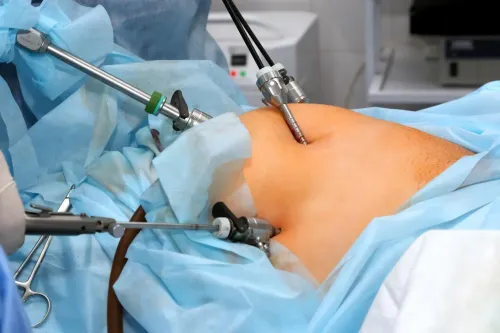
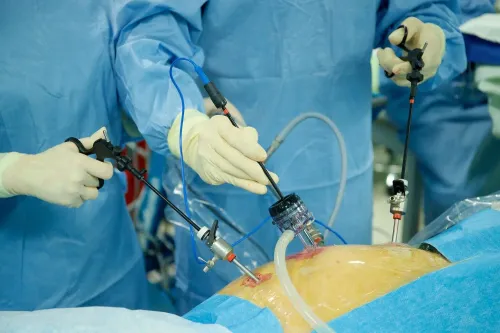
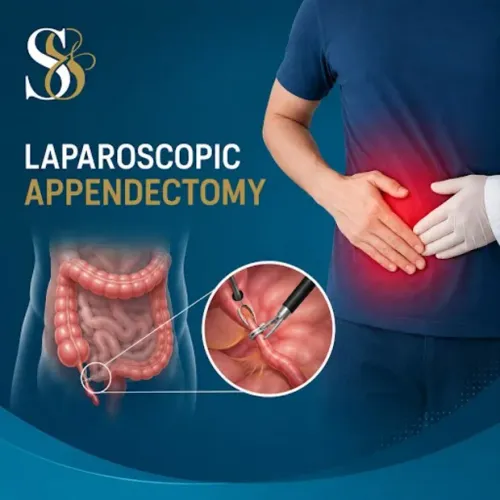
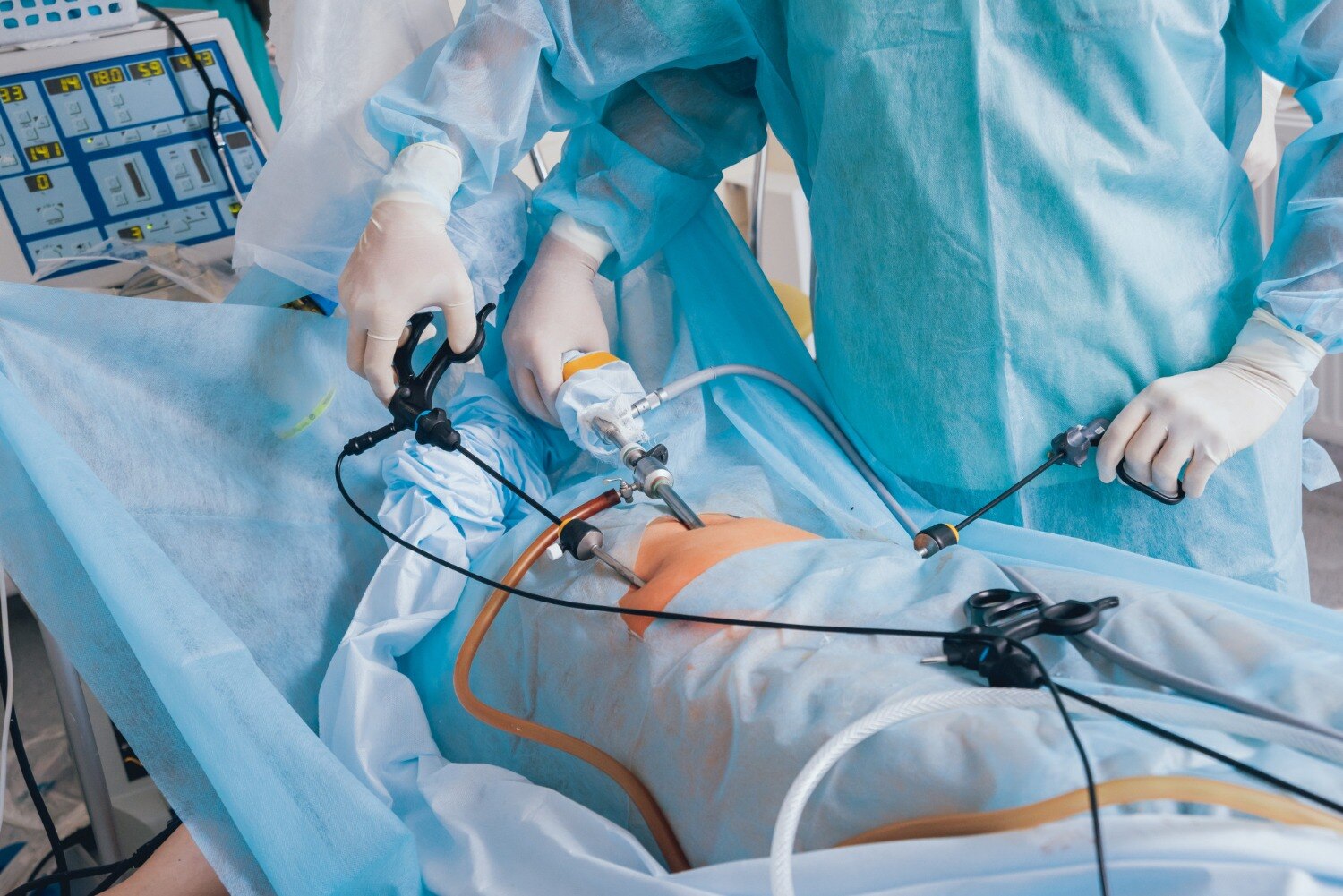
For a painful or enlarging hernia, laparoscopic versus open hernia repair is a trade-off, not a guaranteed winner. Laparoscopic repair uses several small incisions away from the groin defect and usually requires general anaesthesia.
Open repair uses an incision over or near the defect and may be possible with regional or local anaesthesia in selected patients.
| Option | Pain and recovery | Main trade-offs |
|---|---|---|
| Laparoscopic | Generally less early and chronic groin pain after inguinal repair; quicker return to usual activity | General anaesthesia; vascular, bowel, peritoneal, and trocar-related injury; possible conversion to open surgery |
| Open mesh repair | Direct access to the defect; recovery varies with size and location | More early and chronic groin pain in comparative inguinal studies; wound problems; regional or local anaesthesia may be suitable |
These averages do not predict every hernia surgery recovery. Recurrence risk, chronic groin pain, wound problems, time away from work, lifting restrictions, and anaesthetic risk all belong in the discussion. Results also depend on the defect, previous repair, and the surgeon’s experience.
Previous abdominal or pelvic surgery, adhesions, obesity, pregnancy, anticoagulant use, severe medical disease, or high anaesthesia risk can shift the balance. Laparoscopy may require conversion or another procedure if adhesions or an injury prevent safe progress. An open or hybrid operation may be more appropriate for a complex defect.
Choose the route after matching the hernia and your fitness for surgery, not after a promise that one method is always safer or faster.
What should you settle before choosing elective repair?
Do not book elective repair until you know the defect, the reason for the proposed approach, and what would change the plan. A hernia surgery consultation should establish whether examination is enough or whether ultrasound or CT is needed for an occult, recurrent, femoral, incisional, obese, or complex hernia.
Use your preoperative hernia assessment to ask:
- Is the defect inguinal, femoral, ventral, incisional, or recurrent?
- Why does its location and my previous operation favour laparoscopic or open repair?
- Which anaesthesia is planned, and what mesh will be used? Ask your hernia mesh questions before consent.
- How long will lifting, driving, and work restrictions last?
- What finding would trigger conversion to open repair, laparoscopy, a hybrid operation, or urgent treatment?
| Option | Why it may fit | What changes the choice |
|---|---|---|
| Laparoscopic | Recurrent hernia after open repair or bilateral defects | Adhesions, prior posterior repair, anaesthetic risk, or complex anatomy |
| Open | Recurrence after posterior repair or a repair needing direct access | Defect size, contamination, and abdominal-wall reconstruction needs |
| Urgent treatment | Sudden painful, firm, irreducible bulge with vomiting, distension, fever, or dark skin | Do not delay for routine optimisation |
Before elective surgery, address smoking, obesity, uncontrolled diabetes, malnutrition, chronic cough, and constipation because they increase wound, pulmonary, anaesthetic, and recurrence risks. Optimisation is not permission to ignore an acute change.
A bulge soon after repair may be a seroma after hernia repair, not recurrence. Larger repairs often produce seromas that settle with observation; routine aspiration can introduce infection. Examination and imaging distinguish them. Dr. Shaunak Saha can connect those findings and your work demands to a realistic surgical choice.
Related services
Laparoscopic General Surgery A hernia occurs when internal tissue pushes through a weak area in the surrounding muscle or abdominal wall, creating a bulge or swelling. View service → |
Hernia Surgery Open hernia repair is a surgical procedure used to treat a hernia through an incision made directly over or near the affected area. View service → |
Frequently asked questions
Which hernia symptoms require urgent assessment?
Seek urgent assessment for a sudden painful, firm lump that cannot be pushed back, especially with vomiting, abdominal swelling, or inability to pass stool or gas. These symptoms can indicate incarceration, strangulation, or bowel obstruction.
How does a surgeon confirm that the hernia is causing the problem?
The surgeon reviews your symptoms and examines the lump while you stand, cough, or strain. An ultrasound or CT scan can clarify the diagnosis when the examination is inconclusive or another condition could explain the pain.
Which hernias are commonly considered for laparoscopic repair?
Surgeons commonly consider laparoscopic repair for suitable groin hernias, bilateral inguinal hernias, recurrent hernias after open repair, and selected incisional or ventral hernias. The hernia's size, location, prior operations, health, and surgeon expertise affect the choice.
How do laparoscopic and open repair compare for a painful or growing hernia?
Laparoscopic repair uses small incisions and often offers less early wound discomfort, particularly for bilateral or recurrent groin hernias. Open repair may suit a first-time, one-sided hernia, a large defect, or patients for whom general anaesthesia poses greater risk. Both approaches involve trade-offs involving recurrence, chronic pain, mesh, recovery, and complications.
What should you settle before choosing elective repair?
Confirm whether the hernia needs repair now, which technique and mesh plan the surgeon recommends, the anaesthesia required, expected activity restrictions, warning signs after surgery, recurrence and chronic pain risks, and the surgeon's experience with that repair.