Bright-red blood, itching and anal pain can come from hemorrhoids, but the pattern matters. By comparing symptom clues, warning signs, examination steps and sensible first measures, you can decide when home care is reasonable and when you need prompt assessment.
Key takeaways
- Bright-red, painless bleeding after straining often fits internal hemorrhoids.
- A sudden, painful bluish lump can indicate a thrombosed external hemorrhoid.
- Black stools, heavy bleeding, dizziness or fainting need urgent medical care.
- Seek examination when bleeding recurs, pain persists or symptoms do not improve.
Which symptoms fit hemorrhoids, and which point to another condition?
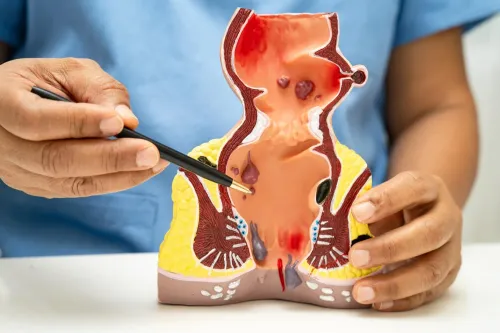
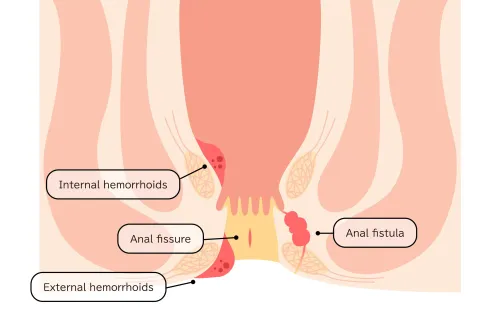
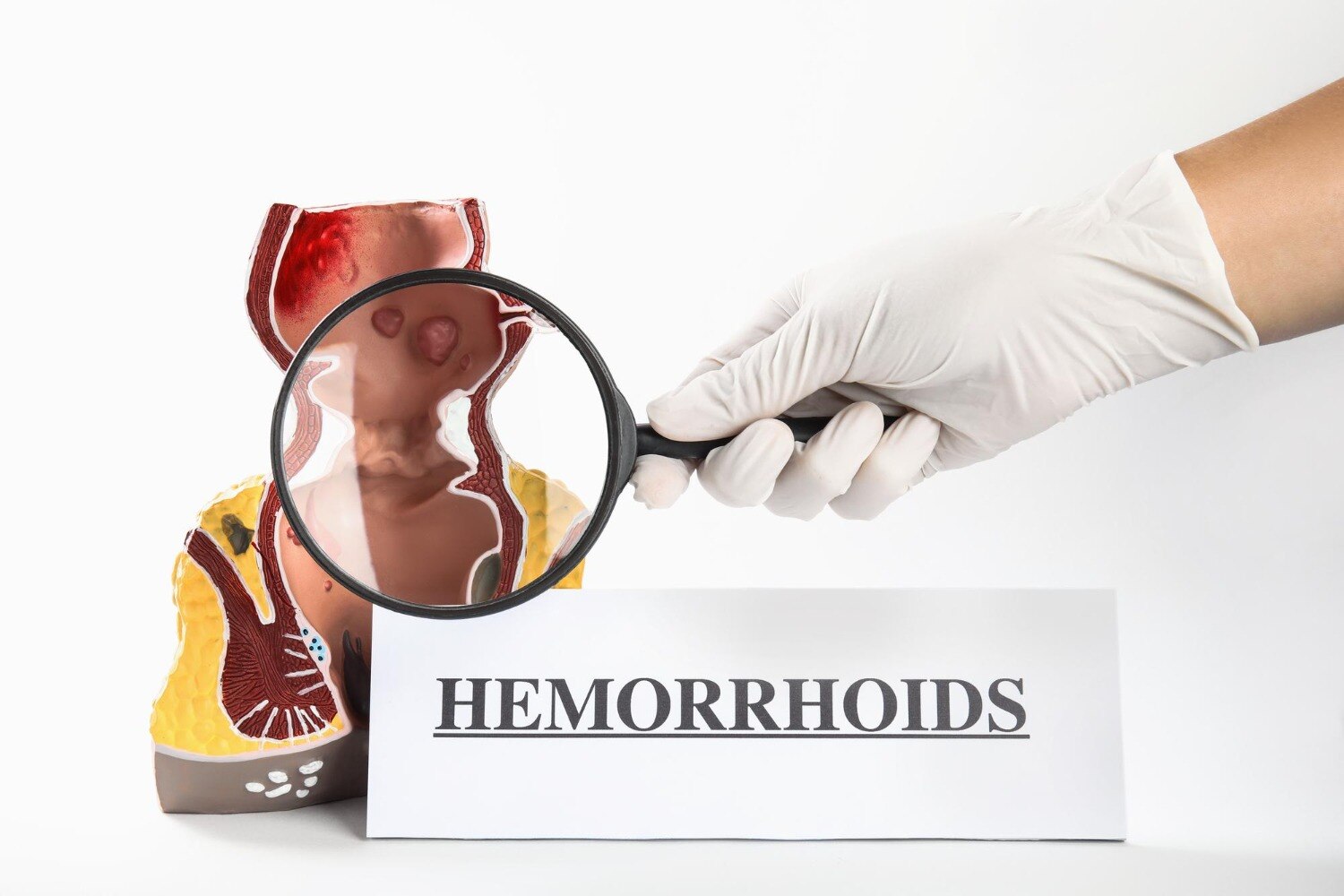
Internal hemorrhoids arise above the dentate line and most often cause painless, bright-red bleeding, especially after straining. They can also cause itching, mucus or a soft tissue lump when they prolapse. External hemorrhoids feel like a tender swelling; a thrombosed external hemorrhoid often appears as a suddenly painful bluish lump.
| Pattern | More consistent with | Clues that separate it |
|---|---|---|
| Sharp, tearing anal fissure pain during bowel movements and afterward | Anal fissure | Pain is stronger than the bleeding; uncomplicated internal hemorrhoids are usually painless |
| Constant or rapidly worsening pain | Abscess | Fever, redness, swelling or pus can develop |
| Small opening near the anus with recurring drainage | Fistula | Drainage returns after temporary improvement |
| Lump or tissue protruding during straining | Rectal prolapse | Tissue does not quickly return and may involve more than a hemorrhoid |
| Painful swelling in the cleft above the anus | Pilonidal disease | It usually affects the upper natal cleft, not the anal opening |
| Itching without a typical lump or bleeding pattern | Skin irritation or infection | Moisture, stool seepage, scented wipes, dermatitis, fungal infection and pinworms can all cause it |
Itching alone proves little. Repeated scrubbing, harsh soap and scented products can damage already irritated skin and prolong symptoms.
Bleeding does not automatically mean hemorrhoids. Seek prompt medical assessment for persistent bleeding, severe pain, fever, pus or tissue that cannot be pushed back; urgent care is needed for heavy bleeding, fainting, black stools or inability to pass stool or gas.
What does the blood pattern mean, and when is it urgent?
A few streaks of bright-red blood on toilet paper or on the outside of a stool can occur with hemorrhoids or an anal fissure, but that pattern does not prove the cause. Blood coating stool can come from the anal canal or lower rectum.
Blood mixed into stool suggests bleeding farther inside the bowel, so arrange medical assessment, especially if it recurs. Polyps, colorectal cancer, inflammatory bowel disease, infectious colitis and diverticular disease can bleed without a visible anal lump.
Black tarry stool can indicate digested blood from higher in the digestive tract and needs urgent care. Iron tablets, bismuth medicines and some foods can also darken stool; report every medicine and supplement you take.
Seek emergency help for:
- Heavy or continuous bleeding, fainting, marked dizziness or unusual weakness
- Black stools, severe abdominal pain or a condition that is worsening quickly
Arrange prompt assessment for fever, pus, severe or increasing anal pain, inability to pass stool or gas, or prolapsed tissue that cannot be pushed back. These findings can signal infection, obstruction, significant blood loss or a problem other than uncomplicated hemorrhoids.
Do not rely on home treatment when bleeding occurs with unexplained weight loss, anaemia, a persistent change in bowel habits, abdominal pain or a family history of colorectal cancer. Persistent or unexplained bleeding needs evaluation even when you suspect hemorrhoids.
How does a clinician confirm whether hemorrhoids are responsible?
A clinician confirms hemorrhoids by matching your bleeding or pain pattern with the examination findings, then checking whether another condition fits better.
1. Expect questions about when symptoms began, whether blood appears before or after the stool, and how much you see. The clinician will ask about hard stools, straining, time spent on the toilet, pregnancy, previous episodes, medicines, and family history of colorectal cancer.
2. Tell the clinician if you take aspirin, warfarin, apixaban, or another anticoagulant. Do not stop a blood thinner without instructions.
3. Inspection of the skin and anal opening can reveal a fissure, thrombosed lump, swelling, drainage, or prolapsed tissue. These findings help separate hemorrhoids from infection, fistula, skin disease, and rectal prolapse.
4. A digital rectal examination checks the anal canal and rectal wall for tenderness, lumps, or other abnormalities. A normal examination does not exclude an internal lesion or bleeding from higher in the bowel.
5. Anoscopy or proctoscopy lets the clinician view internal hemorrhoids and other lower-rectal findings directly. Bring a description or photograph of recurrent bleeding only when requested.
6. Sigmoidoscopy or colonoscopy becomes relevant when bleeding persists or remains unexplained, you are due for colorectal-cancer screening, or you have anaemia, weight loss, altered bowel habit, abdominal pain, or a relevant family history. Report black stool, fever, or fainting promptly instead of assuming hemorrhoids are responsible.
What can you do first when symptoms are mild?
Mild symptoms often settle when you make stools softer and stop straining. Fibre for hemorrhoids works best when you increase it gradually toward 20–35 grams daily.
- Choose vegetables, fruit, pulses, whole grains and nuts. Increase the amount slowly if bloating develops.
- If you use psyllium, start with about 5 grams mixed into at least 240 millilitres of water once daily, then drink another glass. Adjust only as the product label or a clinician advises.
- Keep psyllium at least two hours away from oral medicines because it can affect absorption. Avoid it if you have trouble swallowing or possible bowel obstruction until a clinician advises you.
- Maintain fluid intake so your urine stays pale, unless a medical condition limits fluids.
- Use the toilet when you feel the urge. Do not strain or sit reading on the toilet.
- Take a warm sitz bath for discomfort. Use comfortably warm, not scalding, water, and stop if irritation worsens.
Short-term creams can ease symptoms but cannot correct prolapse. Use hydrocortisone only briefly as directed; prolonged use can thin perianal skin. Local anaesthetics can cause contact dermatitis.
Arrange an assessment if bleeding continues, symptoms return despite these measures, or pain is sharp, severe or otherwise unlike mild hemorrhoid discomfort.
When do hemorrhoids need a procedure or surgical review?
If fibre, fluids, stool-softening and less straining do not control recurrent bleeding, prolapse or discomfort, arrange a specialist review rather than repeating home treatment indefinitely. The examination must identify whether the problem is internal, external, thrombosed, prolapsed or something other than hemorrhoids.
1. Office treatment mainly addresses internal hemorrhoids. Rubber-band ligation is commonly used for grade I, grade II and selected grade III internal hemorrhoids. The band must sit above the dentate line; placing it lower can cause substantial pain. It is not routine treatment for external hemorrhoids.
2. A suddenly painful, bluish lump may be a thrombosed external hemorrhoid. It can settle without surgery, but thrombosed external hemorrhoid excision may provide faster relief for selected patients with severe, recently begun symptoms. A clinician weighs the timing, examination findings, bleeding risk and your preference.
3. Excisional hemorrhoidectomy is usually reserved for large external hemorrhoids, combined internal and external disease, advanced prolapse or symptoms that persist after conservative and office treatment. It is effective, but recovery usually involves more pain and takes longer than recovery from banding.
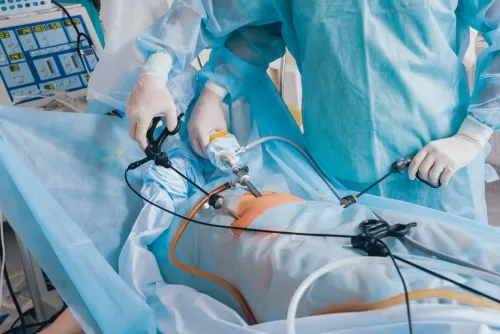
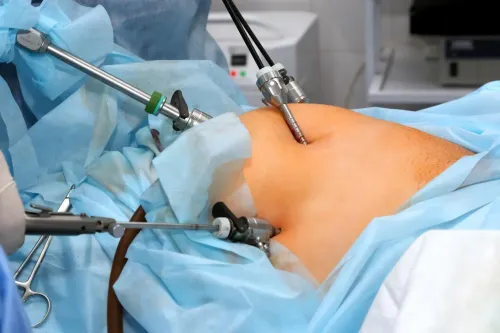
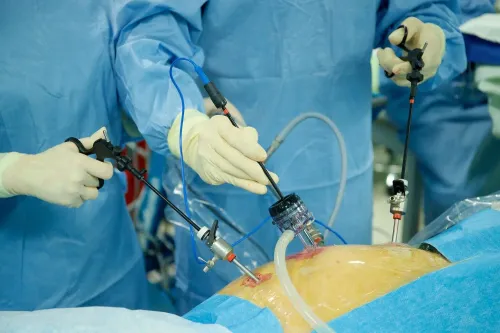
4. Ordinary hemorrhoids do not usually need laparoscopic abdominal surgery. An abdominal operation points to an unusual situation or a different diagnosis.
Dr. Shaunak Saha can assess a bleeding or painful lump, choose an appropriate anorectal procedure and arrange further bowel evaluation when hemorrhoids do not explain the findings. Treatment should follow the diagnosis, not the presence of blood alone.
Related service
Anorectal Surgery Anorectal Disorders – Fissure, Fistula, Hemorrhoids, Pilonidal Sinus & Abscess Anorectal disorders affect the anus, rectum and surrounding tissues and can cause pain, bleeding, swelling, itching, discharge and difficulty with... View service → |
Frequently asked questions
Which symptoms fit hemorrhoids?
Internal hemorrhoids commonly cause painless bright-red bleeding after straining, while prolapse can cause itching, mucus or a soft tissue lump. External hemorrhoids cause a tender swelling, and thrombosis can produce a suddenly painful bluish lump.
When is bleeding during a bowel movement urgent?
Seek urgent care for heavy or continuous bleeding, black or tarry stools, dizziness, fainting, weakness or severe abdominal pain. Do not assume rectal bleeding is hemorrhoids.
How does a clinician confirm hemorrhoids?
A clinician reviews the bleeding pattern and bowel symptoms, examines the skin around the anus and may perform a digital rectal examination or anoscopy. Further testing depends on your age, symptoms and examination findings.
What can you do first when hemorrhoid symptoms are mild?
Keep stools soft with fibre and adequate fluids, avoid straining and prolonged toilet sitting, and use warm sitz baths. Arrange an examination if symptoms persist, recur or worsen.