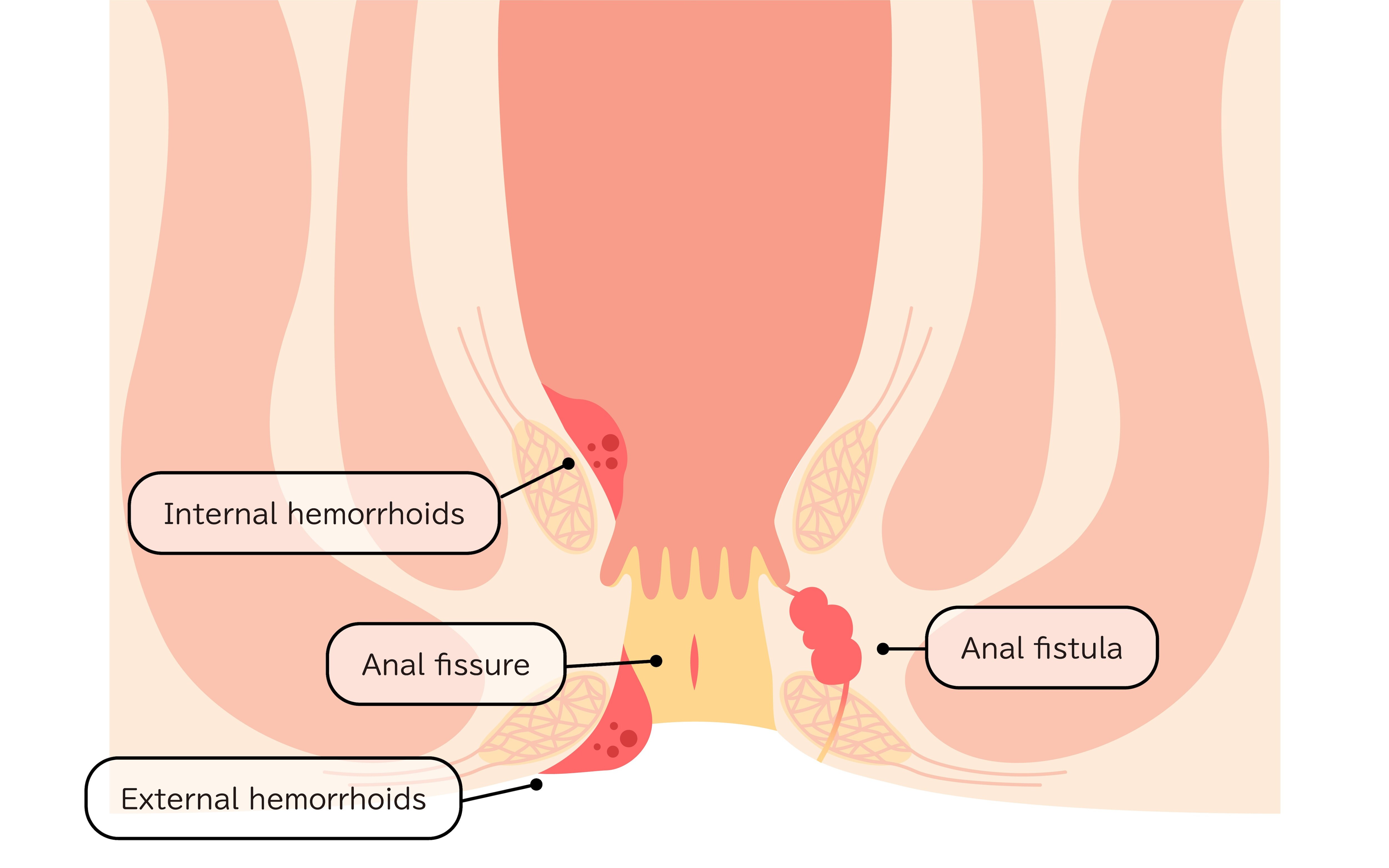
Sharp pain during a bowel movement followed by burning or aching can fit an anal fissure, but persistent pain is not proof of one. You will learn how to distinguish common causes, manage an uncomplicated fissure safely, recognise warning signs and understand when prescription treatment or a procedure deserves discussion.
Key takeaways
- Keep stools soft with fluids, fibre, and a gentle bowel routine.
- Seek examination if pain persists, recurs, or comes with bleeding or a lump.
- A clinician checks the fissure and rules out other causes of anal pain.
- Persistent fissures may need prescription ointment, injections, or a procedure.
Why does a fissure hurt during and after a bowel movement?
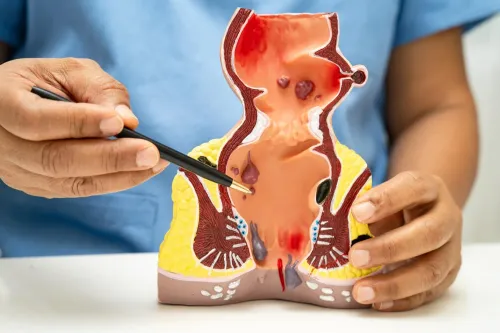
An anal fissure is a tear in the lining of the anal canal. Stool passing over it causes sharp pain during bowel movement, often described as cutting or tearing; burning pain after bowel movement may continue for minutes to hours. The tear is usually in the posterior midline, with fewer fissures at the front.
Internal anal sphincter spasm commonly causes the prolonged pain: it raises pressure, reduces blood flow and healing, and makes constipation more likely.
Hard stools, straining, repeated diarrhoea, childbirth, anal intercourse, dehydration, low fibre intake and delaying bowel movements can start or prolong the tear. Pain can therefore continue after the stool has passed, even when the fissure is not being torn again with every movement.
| Condition | What it is | Typical pain pattern |
|---|---|---|
| Anal fissure | Tear in the anal canal lining | Sharp pain during stool passage, followed by burning, throbbing or aching |
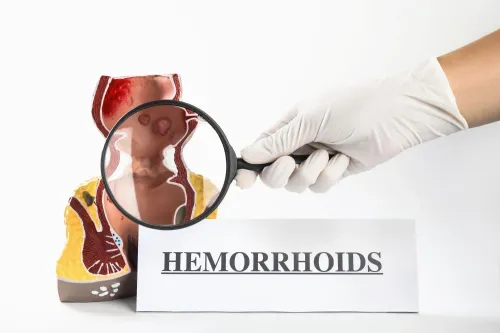
| Haemorrhoids | Swollen vascular cushions | Bleeding, itching or pressure; pain is more typical with a thrombosed external haemorrhoid |
| Fistula | Abnormal tunnel between the anus and nearby skin | Recurrent drainage, irritation or local pain |
| Abscess | Infected pocket | Constant, worsening pain, often with swelling or fever |
Lateral, multiple or unusually large fissures need assessment for inflammatory bowel disease, including Crohn disease, infection or another cause. Persistent pain should not automatically be blamed on a fissure.
What can you do at home to help an uncomplicated fissure heal?
Aim to make stools soft and predictable, not simply to mask pain with painkillers. This fissure home treatment plan supports healing and reduces the repeated trauma that keeps the tear open.
1. Increase fibre gradually through vegetables, fruit, pulses and whole grains. Fibre for anal fissure works best with adequate fluids, unless a clinician has restricted your intake; a sudden increase can otherwise cause bloating or harder stools.
2. If constipation continues, ask a pharmacist or clinician to select and dose an osmotic stool softener for you. Do not repeatedly use stimulant laxatives without guidance. Treat repeated loose stools too, because frequent diarrhoea can keep the fissure open.
3. Do not strain, sit on the toilet longer than necessary or ignore the urge to pass stool. After a bowel movement, use a warm sitz bath for 10 to 20 minutes; the heat can relax the internal sphincter and ease pain.
4. Clean gently with water or unscented soap, then pat dry. Avoid fragranced wipes and harsh scrubbing, which can irritate the area.
Do not insert creams or objects into the anus unless a clinician has specifically advised it. Do not assume rectal bleeding is a fissure: seek advice before using a prescribed or over-the-counter product when the bleeding has not been explained.
How long should you manage symptoms before seeking an examination?
Manage a new acute fissure with stool regulation and local care while the pain and bleeding improve. Do not set an automatic deadline if symptoms are severe or changing quickly.
1. Continue home measures while symptoms steadily ease. Arrange an examination if pain or bleeding persists despite softer, predictable stools and local care, keeps returning, or continues for about six to eight weeks.
2. Treat a fissure lasting six weeks or longer as a reason for assessment. This is generally a chronic anal fissure, especially when examination shows exposed internal sphincter fibres, a sentinel skin tag or a hypertrophied anal papilla. Chronic fissures are less likely to heal with stool regulation alone.
3. Seek prompt medical assessment instead of waiting if pain is severe, constant or rapidly worsening. Also act promptly for fever, swelling, pus, a painful lump, urinary difficulty, inability to pass stool or gas, heavy bleeding, dizziness, faintness, black stools, unexplained weight loss, symptoms of anaemia or severe weakness.
These rectal bleeding warning signs can indicate an abscess, significant bleeding or another condition rather than an uncomplicated fissure. Persistent bleeding deserves examination even when the pain feels typical, because bleeding should not be attributed to a fissure without confirmation.
What happens during an assessment for persistent anal pain?
A visible tear and a characteristic pain pattern usually establish the diagnosis. During an anal fissure examination, the clinician may gently inspect the outside of the anus for:
- A fissure or sentinel pile
- Swelling, drainage or skin lesions
- A thrombosed external haemorrhoid
A painful acute fissure should not be subjected to a forceful digital rectal examination or anoscopy, because inserting instruments can intensify pain and sphincter spasm. Once severe pain and an abscess are considered unlikely, anoscopy may be appropriate and tolerable for inspecting the anal canal.
Further testing or examination under anaesthesia may be considered when the diagnosis is uncertain, symptoms are atypical, healing has failed, or the tear is a lateral anal fissure or appears in multiple sites. These patterns can prompt evaluation for:
- Crohn disease or another inflammatory disease
- Infection or a sexually transmitted infection
- Less commonly, anal or rectal cancer
Tell the clinician about childbirth-related injury, continence problems, inflammatory bowel disease, prior anal surgery and previous fissures. These details affect the safety and choice of treatment, particularly if a procedure that changes anal-sphincter function is being considered.
Persistent pain should not automatically be attributed to a fissure, especially when bleeding, a lump, drainage or unusual examination findings are present.
When does a fissure need prescription treatment or a procedure?
A chronic fissure that fails to heal despite reliable stool regulation may need prescription treatment that relaxes the internal anal sphincter.
| Option | What it does | Main trade-off |
|---|---|---|
| Nitroglycerin ointment | Glyceryl trinitrate lowers sphincter pressure without surgery | Headaches commonly limit treatment |
| Diltiazem for anal fissure or topical nifedipine | Relaxes the sphincter with fewer headaches than nitroglycerin | Availability and approval differ by country |
| Botulinum toxin fissure treatment | Temporarily relaxes the muscle without cutting it | Healing is less predictable than surgery |
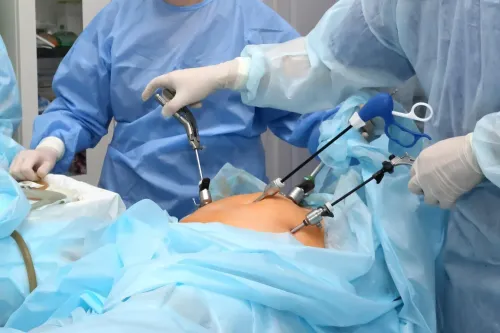
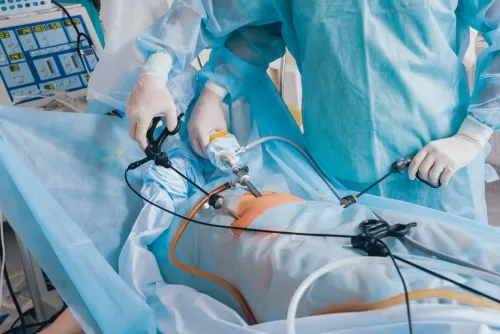
| Lateral internal sphincterotomy | Divides part of the internal sphincter to reduce resting pressure | Continence risk must be assessed before surgery |
Lateral internal sphincterotomy has the most durable healing results for appropriately selected patients, with reported rates commonly above 90%. A tailored or limited cut avoids the assumption that dividing more muscle produces a better result.
Discuss baseline continence, flatus leakage, prior obstetric injury, inflammatory bowel disease, previous anal surgery and known sphincter damage before choosing surgery. Botulinum toxin can suit someone whose risk of postoperative continence impairment matters greatly, because it avoids a permanent sphincter cut.
A sentinel skin tag supports the chronic-fissure pattern; removing it alone does not correct sphincter spasm or reliably stop the pain. Dr. Shaunak Saha can assess persistent anorectal pain and weigh medical treatment, botulinum toxin or sphincter surgery against your continence risks.
Related service
Anorectal Surgery Anorectal Disorders – Fissure, Fistula, Hemorrhoids, Pilonidal Sinus & Abscess Anorectal disorders affect the anus, rectum and surrounding tissues and can cause pain, bleeding, swelling, itching, discharge and difficulty with... View service → |
Frequently asked questions
Why does an anal fissure hurt during and after a bowel movement?
Stool passing over the tear causes sharp cutting or tearing pain. Burning pain can continue for minutes to hours because the anal sphincter may tighten and reduce blood flow to the injured area.
What can you do at home to help an uncomplicated fissure heal?
Keep stools soft with adequate fluids and fibre, avoid straining, do not delay the urge to pass stool, and use warm sitz baths for comfort. Seek medical advice before using laxatives or pain creams.
How long should you manage fissure symptoms before seeking an examination?
Arrange an examination if pain does not improve with basic care, keeps returning, or lasts beyond a short episode. Seek prompt care for heavy bleeding, fever, pus, severe swelling, or difficulty passing stool.
What happens during an assessment for persistent anal pain?
The clinician asks about pain, bleeding, bowel habits, and duration, then inspects the area. A gentle digital examination or anoscopy is used only when appropriate and tolerable, while other causes are considered.
When does a fissure need prescription treatment or a procedure?
A persistent or recurrent fissure may need prescription ointment to relax the anal sphincter, botulinum toxin injection, or a procedure when conservative care and medical treatment do not heal it.