Heartburn or regurgitation that continues despite omeprazole, pantoprazole, or esomeprazole does not automatically mean you need surgery. You will be better placed to discuss fundoplication after confirming that reflux is the cause, understanding the available tests and alternatives, and weighing symptom relief against swallowing and gas-related problems.
Key takeaways
- Persistent symptoms need objective testing before fundoplication is considered.
- Manometry and pH monitoring help identify patients most likely to benefit.
- Fundoplication can reduce reflux but may cause gas, bloating, or swallowing difficulty.
- Compare surgery with continued PPI treatment after confirming the reflux diagnosis.
When does persistent reflux become a reason to investigate surgery?
Persistent acid reflux means troublesome heartburn or regurgitation that continues despite an adequate PPI trial, not an occasional episode after a large or spicy meal. Ongoing symptoms alone do not prove that fundoplication will help; they may reflect another disorder or a different type of reflux.
- Check how you take the medicine. Omeprazole, pantoprazole and esomeprazole are taken 30–60 minutes before meals. Twice-daily PPI dosing when prescribed by a clinician may be needed before symptoms are labelled PPI-refractory GERD.
- Describe the dominant symptom. Regurgitation and frequent heartburn provide a stronger reason to investigate antireflux surgery than isolated cough, hoarseness, throat clearing or chest discomfort.
- Look for competing diagnoses. Functional heartburn, reflux hypersensitivity, achalasia, peptic ulcer disease, gallbladder disease, eosinophilic oesophagitis and cardiac chest pain can mimic GERD. Treating the wrong diagnosis exposes you to surgery without addressing the cause.
- Confirm reflux objectively. Upper endoscopy can find erosive oesophagitis, Barrett’s oesophagus or a hiatal hernia, although a normal result does not exclude GERD. If GERD is not established, pH monitoring is usually performed off treatment; persistent symptoms on treatment may require pH-impedance monitoring while taking the PPI.
Fundoplication becomes a serious discussion after confirmed GERD, troublesome symptoms despite correctly used medication, medication intolerance, severe erosive disease or a significant hiatal hernia. Extra-oesophageal symptoms need stronger reflux evidence and symptom correlation before surgery is considered.
Which tests show whether fundoplication is likely to address the problem?
No single test proves that fundoplication will help. The aim is to show that reflux causes your symptoms and to identify anatomy or movement problems that surgery could worsen.
Upper endoscopy inspects the oesophagus and stomach for erosive oesophagitis, Barrett’s oesophagus, peptic stricture, malignancy, and hiatal hernia. Severe erosive disease provides strong objective evidence of GERD. A normal-looking oesophagus does not exclude reflux, so reflux monitoring may still be necessary.
| Test | Decision it informs |
|---|---|
| Upper endoscopy | Finds damage, Barrett’s oesophagus, narrowing, cancer, or a hiatal hernia |
| pH monitoring off PPI therapy | Confirms abnormal acid exposure when GERD has not already been established |
| pH-impedance monitoring on treatment | Detects acid and non-acid reflux and tests whether symptoms occur during reflux episodes |
| High-resolution manometry | Measures contractility, excludes achalasia or a major motility disorder, and helps anticipate postoperative swallowing difficulty |
Use ambulatory pH monitoring off PPI therapy when previous testing has not confirmed GERD. If GERD is documented but symptoms continue while taking a PPI, pH-impedance monitoring on treatment can show whether ongoing symptoms match acid or non-acid reflux.
High-resolution manometry is performed before antireflux surgery because untreated achalasia can be mistaken for reflux. A barium swallow adds anatomical detail when a large hiatal hernia, oesophageal shortening, altered anatomy, or a prior repair needs clarification.
Who may reasonably compare surgery with continued medical treatment?
Once objective GERD is confirmed, compare surgery with continued treatment when symptoms remain troublesome despite correctly used omeprazole, pantoprazole, or another PPI; medication causes unacceptable effects; symptoms return whenever treatment stops; severe erosive oesophagitis is present; or a significant hiatal hernia contributes to reflux.
Troublesome regurgitation strengthens the case, but symptoms alone do not prove surgery will help.
| Option | What it involves | When it may fit |
|---|---|---|
| PPI therapy and lifestyle measures | Acid suppression, weight management, smaller meals, and avoiding personal triggers | Symptoms are controlled, or surgery offers no clear advantage |
| Laparoscopic fundoplication | A complete or partial stomach wrap, usually with hiatal hernia repair | Confirmed reflux with persistent symptoms or regurgitation |
| Magnetic sphincter augmentation | A ring of magnetic beads supports the lower oesophageal sphincter | Selected patients with suitable anatomy and preserved swallowing |
| Transoral incisionless fundoplication (TIF) | An endoscopic partial wrap without external incisions | Selected anatomy, usually without a large hernia |
| Hiatal hernia repair without a complete wrap | Closes the widened hiatus but does not create a full valve | The hernia is the main mechanical problem and a wrap is unsuitable |
| Roux-en-Y gastric bypass | Bariatric surgery that reduces weight and diverts acid exposure | Obesity coexists with reflux and the patient qualifies for bariatric surgery |
Obesity can make fundoplication less attractive because mechanical stress may strain the repair, while bypass addresses weight and reflux together. For a consultation with Dr. Shaunak Saha in Pune, bring endoscopy, reflux-monitoring and manometry reports, your medication and dosing history, and weight history.
What happens during laparoscopic fundoplication, and why are wraps different?
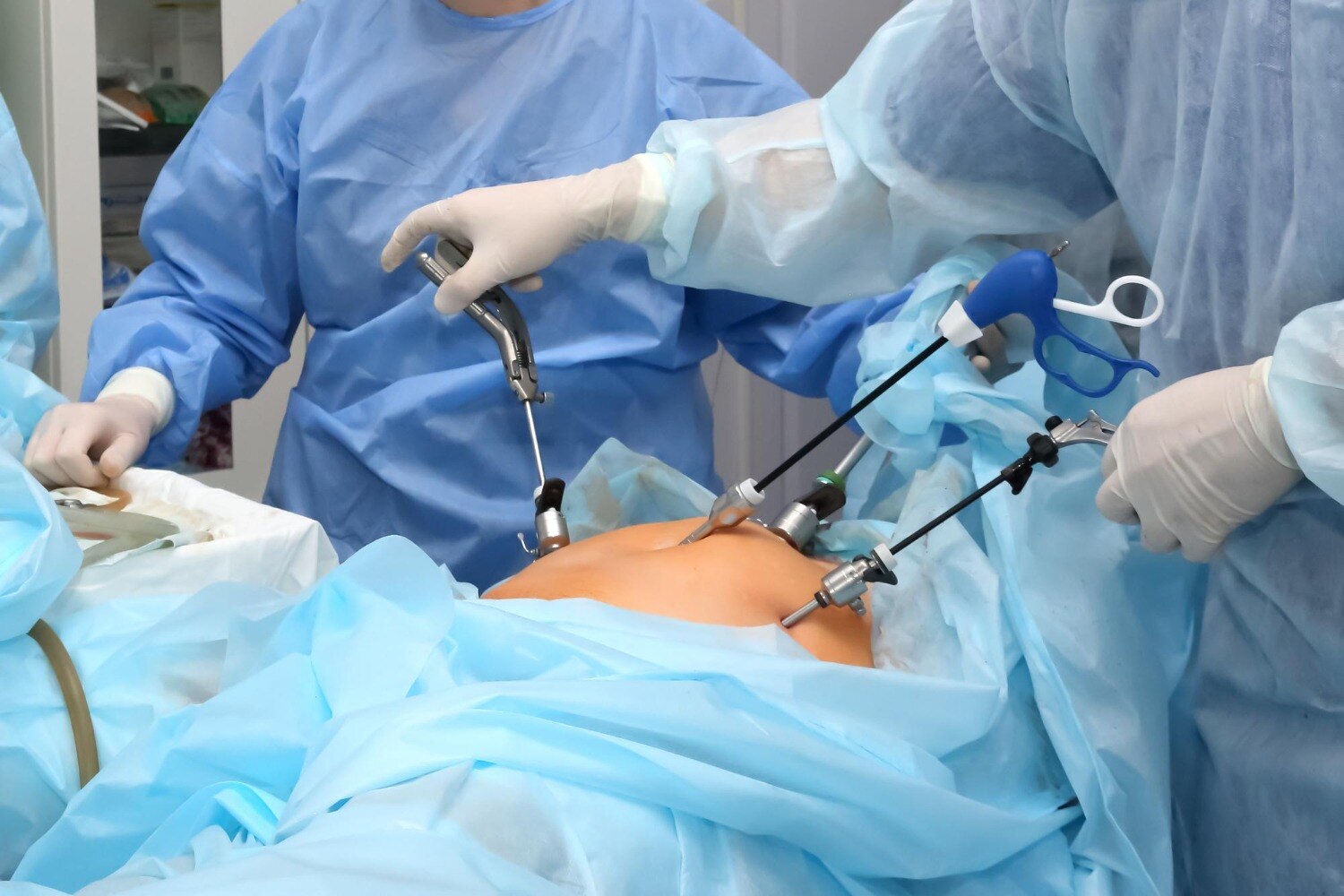
During laparoscopic fundoplication, the surgeon works through small abdominal incisions using a camera and instruments. If a hiatal hernia is present, the stomach and lower oesophagus are returned below the diaphragm.
The widened opening is narrowed with sutures during hiatal opening repair, and the upper stomach is then wrapped around the lower oesophagus to reinforce the valve.
| Option | Wrap | Main trade-off |
|---|---|---|
| Nissen fundoplication | Complete 360-degree wrap | Strong reflux barrier, with greater risk of dysphagia or difficulty venting gas |
| Toupet fundoplication | Partial posterior wrap | Preserves easier passage for food and gas when motility is reduced |
| Dor fundoplication | Partial anterior wrap | Provides a less restrictive barrier, selected for particular anatomy or operative circumstances |
The choice is not a ranking of good, better, and best. Review these factors with the surgeon:
- High-resolution manometry findings, especially weak contractions or a major motility disorder
- Current swallowing function, including food sticking or slow passage
- Hiatal hernia size, oesophageal shortening, and the shape of the junction
- The pattern of reflux, including dominant regurgitation or documented acid exposure
- Previous hiatal or upper-abdominal operations, which can change the available tissue and technical approach
- The balance between reflux control and postoperative dysphagia, gas-bloat, inability to belch, and increased flatulence
A tighter wrap is not automatically the safer or more effective choice for every oesophagus.
Which trade-offs should you accept before choosing fundoplication?
Expect a tighter junction to improve regurgitation while making food and gas harder to pass. The trade-off can include postoperative dysphagia, gas-bloat syndrome, inability to belch or vomit, bloating, increased flatulence, and nausea.
| Option | Main potential benefit | Main trade-off |
|---|---|---|
| Complete 360-degree wrap | Strong reflux barrier and regurgitation control | More risk of postoperative dysphagia and difficulty venting gas |
| Partial Toupet or Dor wrap | Easier swallowing and less gas-bloat syndrome | Reflux control may be less complete |
Before choosing, confirm that you accept these possibilities:
- Wrap slippage and recurrent hiatal hernia can cause renewed obstruction or reflux and may require endoscopy, imaging, reflux testing, or reoperation.
- Recurrent reflux and persistent symptoms can occur even after technically successful surgery. You may still need a proton pump inhibitor or another acid-suppressing medicine.
- Fundoplication is less predictable for isolated cough, hoarseness, throat clearing, or chest discomfort when reflux testing shows no positive symptom association.
- Barrett’s oesophagus still requires scheduled endoscopic surveillance. Fundoplication controls reflux; it is not a cancer-prevention treatment.
Ask what symptom improvement is realistic, which wrap fits your manometry and anatomy, and what happens if swallowing difficulty or reflux persists. Further evaluation or reoperation carries additional recovery time and surgical risk.
Frequently asked questions
When does persistent reflux become a reason to investigate surgery?
Investigation becomes reasonable when troublesome heartburn or regurgitation continues despite an adequate PPI trial, especially after confirming that reflux causes the symptoms.
Which tests show whether fundoplication is likely to address the problem?
Upper endoscopy checks for oesophageal injury and other conditions, ambulatory pH or impedance-pH monitoring measures reflux, and oesophageal manometry assesses movement and the lower oesophageal sphincter before surgery.
Who may reasonably compare surgery with continued medical treatment?
People with objectively confirmed reflux, persistent troublesome symptoms, and suitable oesophageal movement may compare fundoplication with continued PPI treatment after discussing risks and expected benefits with a surgeon and gastroenterologist.
What happens during laparoscopic fundoplication, and why are wraps different?
The surgeon uses small abdominal incisions to wrap the upper stomach around the lower oesophagus. A complete Nissen wrap and partial Toupet or Dor wraps differ in tightness, reflux control, and the risk of swallowing difficulty or gas-related symptoms.
Which trade-offs should you accept before choosing fundoplication?
You must weigh possible long-term reflux relief against recovery, recurrence, difficulty burping or vomiting, gas and bloating, swallowing problems, and the possibility of needing further treatment.