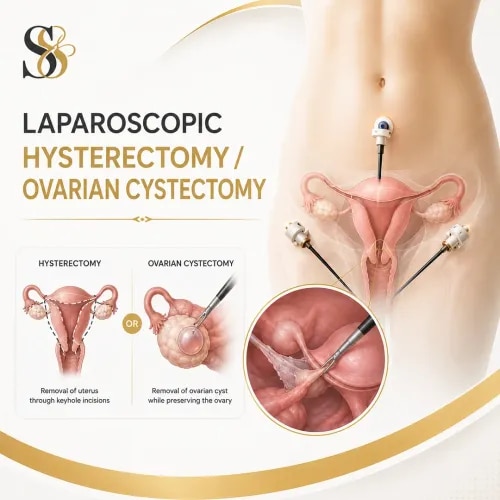
Laparoscopic Hysterectomy / Ovarian Cystectomy service image
Laparoscopic Hysterectomy / Ovarian Cystectomy

Laparoscopic hysterectomy is a minimally invasive surgical procedure for removing the uterus, while laparoscopic ovarian cystectomy involves surgically removing an ovarian cyst while aiming to preserve healthy ovarian tissue where appropriate. These procedures may be recommended for selected gynaecological conditions after detailed evaluation. Dr Shaunak Saha provides surgical consultation and evaluation for patients requiring treatment for selected gynaecological conditions. The exact procedure depends on the diagnosis, symptoms, imaging findings, age, reproductive considerations and overall health. Depending on the medical indication, additional procedures involving the ovaries or fallopian tubes may sometimes be considered. Treatment is planned individually following discussion of the benefits, risks and alternatives. SPECIFICATIONS: Procedure: Laparoscopic hysterectomy or ovarian cystectomy Specialty: Gynaecological surgery Approach: Minimally invasive laparoscopy Conditions: Selected uterine or ovarian conditions Assessment: Clinical examination and imaging Target organs: Uterus and/or ovary Anaesthesia: Usually general anaesthesia Incisions: Small abdominal incisions Treatment planning: Individualised Recovery: Depends on procedure and patient factors FREQUENTLY ASKED QUESTIONS: Q: What is a laparoscopic hysterectomy? A: It is a minimally invasive operation to remove the uterus using small abdominal incisions and a camera. Q: Can an ovarian cyst be removed without removing the ovary? A: In selected cases, ovarian cystectomy can remove the cyst while preserving the remaining ovarian tissue. The appropriate approach depends on the cyst and individual circumstances. Q: Is every ovarian cyst treated with surgery? A: No. Many ovarian cysts can be monitored, while surgery may be recommended depending on symptoms, size, appearance and other clinical factors. Discuss your gynaecological symptoms and treatment options with Dr Shaunak Saha and receive an individualised surgical evaluation.

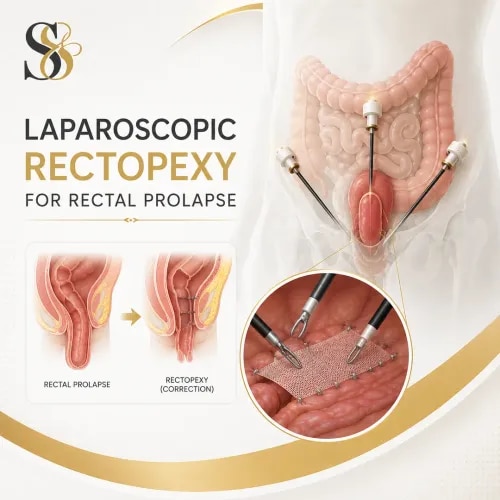
Laparoscopic Rectopexy for Rectal Prolapse service image
Laparoscopic Rectopexy for Rectal Prolapse

Laparoscopic rectopexy is a surgical procedure used to treat rectal prolapse by restoring the rectum to a more appropriate position and securing it within the pelvis. Rectal prolapse occurs when the rectum stretches and protrudes through the anus. Symptoms can include a visible bulge, difficulty with bowel movements, constipation, mucus or bleeding and bowel-control problems. Dr Shaunak Saha provides clinical evaluation for patients experiencing symptoms suggestive of rectal prolapse. Assessment may include physical examination and, where appropriate, investigations such as colonoscopy, anorectal testing or imaging. The choice of rectal prolapse operation depends on factors including the extent of prolapse, age, general health, bowel function and associated pelvic conditions. SPECIFICATIONS: Procedure: Laparoscopic rectopexy Condition: Rectal prolapse Surgical field: Rectum and pelvis Approach: Laparoscopic abdominal surgery Assessment: Clinical and appropriate diagnostic evaluation Objective: Restore and secure the rectum Possible technique: Suture or mesh-supported fixation depending on case Anaesthesia: Usually general or regional anaesthesia depending on procedure Recovery: Individualised Suitability: Determined after specialist assessment FREQUENTLY ASKED QUESTIONS: Q: What is rectal prolapse? A: Rectal prolapse occurs when the rectum stretches and protrudes through the anus. Q: Does rectal prolapse always require surgery? A: Surgery is commonly required for complete rectal prolapse, although treatment depends on the individual condition. Q: What is rectopexy? A: Rectopexy is a surgical technique in which the rectum is repositioned and secured within the pelvis. If you notice a bulge from the anus, difficulty passing stool or changes in bowel control, consult Dr Shaunak Saha for an appropriate evaluation.

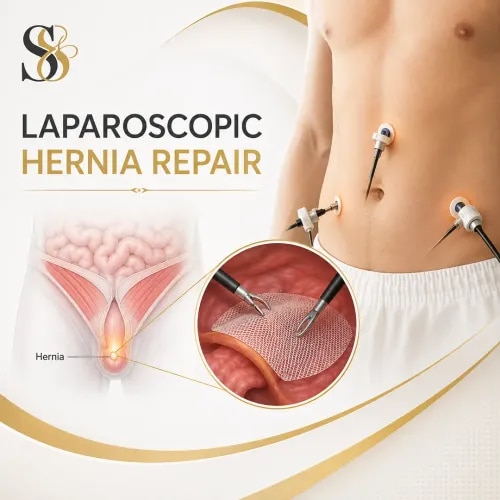
Laparoscopic Hernia Repair service image
Laparoscopic Hernia Repair

A hernia occurs when internal tissue pushes through a weak area in the surrounding muscle or abdominal wall, creating a bulge or swelling. Laparoscopic hernia repair uses small incisions, a camera and specialized instruments to repair the affected area. Dr Shaunak Saha provides evaluation and surgical consultation for patients with suspected inguinal, abdominal or other suitable hernias. The choice between laparoscopic and open repair depends on the type and location of the hernia, previous surgery, symptoms, overall health and other clinical factors. Depending on the hernia and surgical technique, reinforcement with surgical mesh may be considered. The appropriate repair method is determined after individual assessment. SPECIFICATIONS: Procedure: Laparoscopic hernia repair Conditions: Inguinal and selected abdominal hernias Approach: Minimally invasive keyhole surgery Assessment: Clinical examination and imaging when required Repair: Closure and reinforcement of the weakened area Possible reinforcement: Surgical mesh where clinically indicated Anaesthesia: Usually general anaesthesia Incisions: Small abdominal incisions Recovery: Individualised according to procedure and patient health Suitability: Determined by the surgeon FREQUENTLY ASKED QUESTIONS: Q: What are common signs of a hernia? A: A visible or palpable bulge in the groin or abdomen, discomfort or pain, particularly with coughing, lifting or straining, can occur. Q: Does a hernia go away on its own? A: A true abdominal wall hernia generally does not repair itself. Surgical treatment may be recommended depending on symptoms, type and risk. Q: Is laparoscopic hernia surgery suitable for everyone? A: No. The appropriate technique depends on the type of hernia, previous operations, health status and surgical assessment. Have a persistent groin or abdominal bulge evaluated by Dr Shaunak Saha and discuss the most appropriate hernia treatment for your condition.

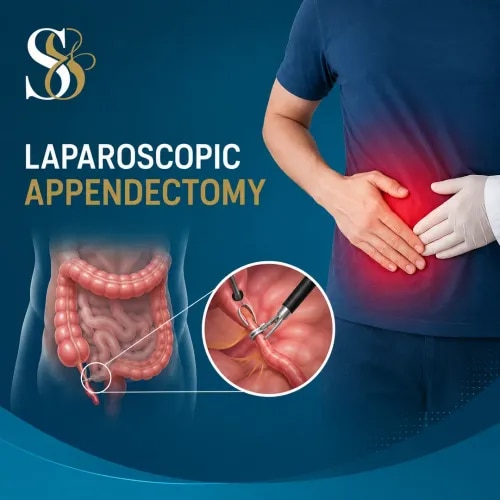
Laparoscopic Appendectomy service image
Laparoscopic Appendectomy

Laparoscopic appendectomy is a minimally invasive operation to remove the appendix, most commonly when appendicitis requires surgical treatment. Laparoscopy uses a camera and specialized instruments introduced through small abdominal incisions. It is a commonly used approach for appendix removal. Dr Shaunak Saha offers surgical consultation and evaluation for patients presenting with suspected appendicitis and other causes of acute abdominal pain. Diagnosis may involve clinical examination, blood tests and imaging depending on the individual case. The appropriate treatment depends on the severity of appendicitis, the patient’s overall condition and the findings of the treating surgical team. Some cases may require antibiotics initially, while others require surgery. SPECIFICATIONS: Procedure: Laparoscopic appendectomy Condition treated: Appendicitis Approach: Keyhole surgery Target organ: Appendix Assessment: Clinical examination and appropriate investigations Anaesthesia: Usually general anaesthesia Incisions: Small abdominal incisions Purpose: Removal of inflamed or diseased appendix Treatment setting: Hospital-based surgical care Suitability: Determined according to individual diagnosis FREQUENTLY ASKED QUESTIONS: Q: What is an appendectomy? A: An appendectomy is surgery to remove the appendix, usually because of appendicitis. Q: Can appendicitis be treated without surgery? A: Some selected cases may initially be treated with antibiotics, but surgery may still be required depending on the condition and clinical assessment. Q: Is laparoscopic appendectomy a keyhole procedure? A: Yes. Laparoscopic appendectomy uses a camera and surgical instruments through small abdominal incisions. If you have persistent or worsening abdominal pain and are concerned about appendicitis, consult Dr Shaunak Saha for timely surgical evaluation.

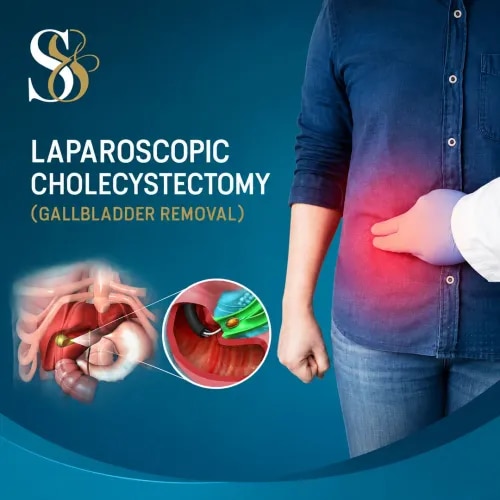
Laparoscopic Cholecystectomy service image
Laparoscopic Cholecystectomy

Laparoscopic cholecystectomy is a minimally invasive surgical procedure used to remove the gallbladder, most commonly when gallstones cause recurrent pain, inflammation, infection or other complications. The procedure is commonly known as keyhole gallbladder surgery and is performed using a small camera and specialized surgical instruments through small abdominal incisions. Dr Shaunak Saha provides consultation and surgical evaluation for patients experiencing symptoms related to gallstones and gallbladder disease. The treatment plan is based on the patient’s symptoms, clinical examination, investigations and overall health. Laparoscopic gallbladder surgery generally involves smaller incisions than conventional open surgery and may be associated with less postoperative discomfort and faster recovery in appropriate patients. SPECIFICATIONS: Procedure: Laparoscopic cholecystectomy Condition treated: Gallstones and symptomatic gallbladder disease Approach: Minimally invasive keyhole surgery Target organ: Gallbladder Common symptoms: Upper abdominal pain, nausea, vomiting and food-related discomfort Assessment: Clinical evaluation and appropriate imaging/laboratory investigations Anaesthesia: Usually general anaesthesia Incisions: Small abdominal incisions Recovery: Depends on individual health and surgical complexity Suitability: Determined after individual medical evaluation FREQUENTLY ASKED QUESTIONS: Q: What is laparoscopic cholecystectomy? A: It is keyhole surgery to remove the gallbladder, commonly performed for symptomatic gallstones and certain gallbladder conditions. Q: Is laparoscopic gallbladder surgery painful? A: Some pain or discomfort is expected after surgery, but laparoscopic surgery generally uses smaller incisions than open surgery. Pain management is provided according to the patient’s needs. Q: When should I see a surgeon for gallstones? A: Recurrent abdominal pain, gallstone-related complications, inflammation, jaundice or other concerning symptoms should be evaluated by a doctor. Book a consultation with Dr Shaunak Saha for evaluation of gallstones and gallbladder problems and discuss whether laparoscopic cholecystectomy is appropriate for you.

Subcategory Tags

Abdominal AbscessAbdominal HerniaAbscess DrainageAcute Abdominal PainAdult CircumcisionAnal Fissure SurgeryAnal Fissure TreatmentAnal Fistula SurgeryAnal Fistula TreatmentAnorectal Disorders,Anorectal SurgeryAppendicitis SurgeonAppendicitis TreatmentAppendix RemovalAppendix SurgeryBaby HerniaBreast Lump Evaluation,Breast Lump TreatmentBreast SurgeryBreast and Thyroid SurgeryChild Hernia SurgeryCircumcisionCircumcision SurgeryColorectal SurgeryCyst RemovalEndovenous TreatmentFacial Nerve SurgeryForeskin SurgeryGallbladder RemovalGallbladder SpecialistGallbladder SurgeryGallstone SurgeonGallstone TreatmentGanglion CystGeneral SurgeonGeneral SurgeryGroin HerniaGynaecological SurgeryHead and Neck SurgeryHemorrhoids TreatmentHepatobiliary SurgeryHernia SurgeryHernia TreatmentHernia Treatment PuneHydrocele RepairHydrocele SurgeryHydrocele TreatmentInguinal HerniaInguinal Hernia SurgeryInguinal Hernia in ChildrenKeyhole Hernia SurgeryKeyhole SurgeryLaparoscopic AppendectomyLaparoscopic CholecystectomyLaparoscopic Colorectal SurgeryLaparoscopic Hernia RepairLaparoscopic HysterectomyLaparoscopic Pediatric SurgeryLaparoscopic RectopexyLaparoscopic Splenectomy

Contact Us

Live Chat

Connect over WhatsApp to resolve your queries realtime.