Severe pain on the right side of your abdomen can signal appendicitis, but kidney, bowel, urinary, reproductive, and abdominal-wall problems can feel similar. You will learn which warning signs require emergency assessment, how clinicians identify the cause, and why the findings determine whether you need an appendectomy, antibiotics, or drainage.
Key takeaways
- Seek emergency care for severe, worsening pain or signs of serious illness.
- Appendicitis pain often shifts to the lower right abdomen, but location alone cannot confirm it.
- Clinicians combine an examination, blood tests, urine tests, and imaging.
- Appendectomy becomes more likely when findings point to an inflamed or perforated appendix.
When right-sided abdominal pain needs emergency care
Severe right-sided abdominal pain belongs in an emergency department when it is intense, worsening, or accompanied by signs that your body is becoming seriously unwell.
Do not wait for an appointment or rely on pain medicine at home if the pain worsens with movement, your abdomen is rigid or has guarding (involuntary tightening when touched), or you cannot keep fluids down.
| Symptom or finding | What to do |
|---|---|
| Pain that is severe, rapidly worsening, or spreading | Go to an emergency department now |
| Fever with repeated vomiting or increasing tenderness | Seek urgent assessment today |
| Fainting, confusion, extreme weakness, pale or clammy skin | Call emergency services; do not drive yourself |
| A rigid abdomen or guarding | Treat it as an emergency, especially with worsening pain |
| Inability to drink without vomiting or very little urine | Seek emergency care to prevent dangerous dehydration |
A rupture, bowel obstruction, kidney problem, or severe infection can worsen after symptoms begin mildly. Appendicitis is one possibility, but kidney stones, urinary infection, bowel disease, ovarian torsion, ectopic pregnancy, and other conditions can cause the same pain.
If pregnancy is possible, right-sided pain with vaginal bleeding, shoulder-tip pain, dizziness, or fainting needs immediate emergency care. Arrange transport rather than driving if you feel faint, confused, or severely unwell.
How appendicitis pain usually develops—and why location is not enough
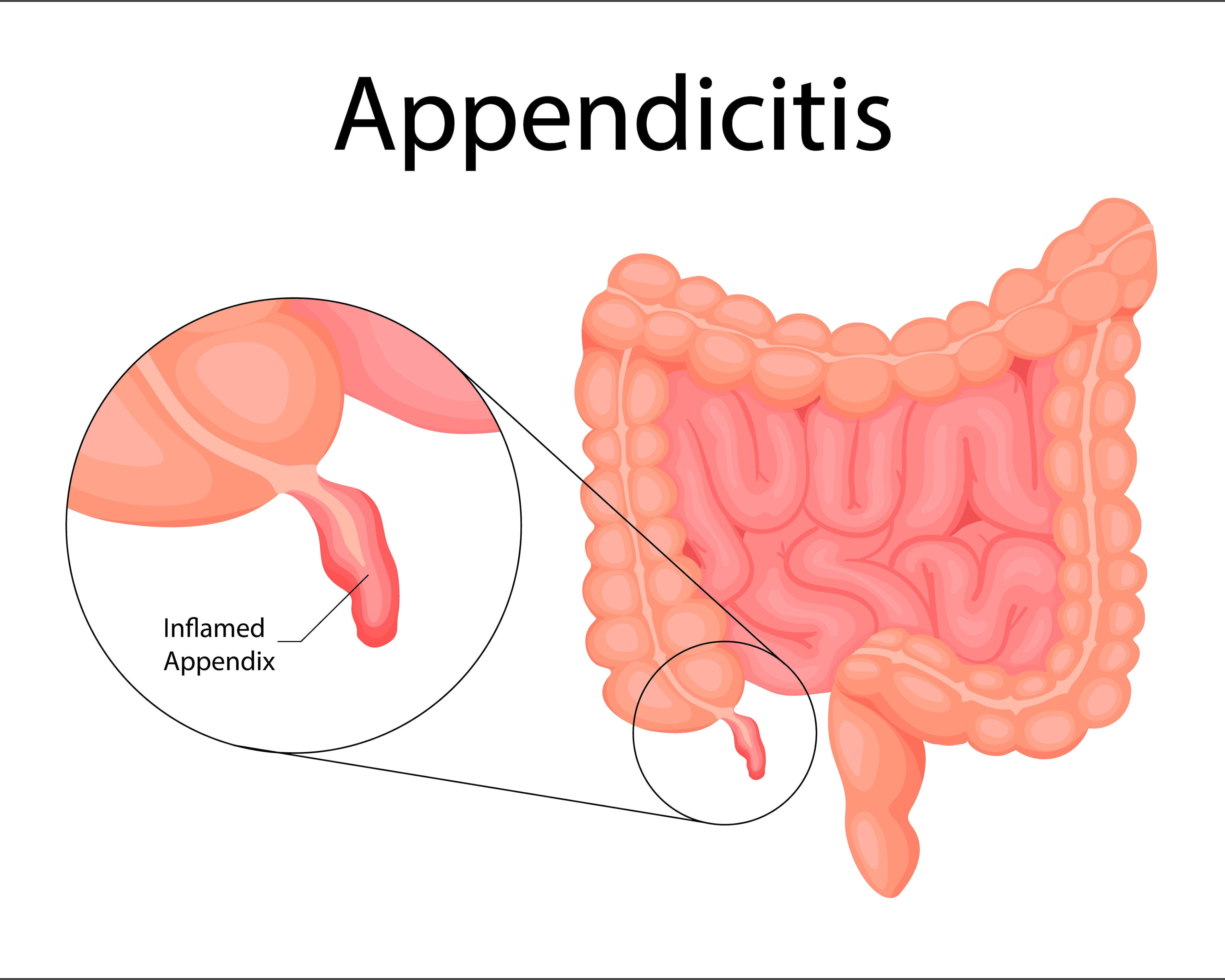
Appendicitis symptoms often start as poorly localised discomfort or pain near the navel, then move over several hours to the right lower quadrant. The pain usually becomes constant and more tender with walking, coughing, or movement, while nausea, loss of appetite, vomiting, and fever may follow.
That pattern is a clue, not a requirement. A retrocecal appendix can cause pain in the flank or back instead of the front of the abdomen. Pregnancy, obesity, and unusual intestinal anatomy can also shift or blur the expected location, so the absence of classic right lower quadrant pain does not rule out appendicitis.
Severe right-sided pain has several other possible causes:
- A kidney stone or urinary infection
- Bowel inflammation, obstruction, or diverticulitis
- Ovarian torsion, a ruptured ovarian cyst, or ectopic pregnancy
- A perforated ulcer or an abdominal-wall or groin problem
These conditions can produce overlapping pain, nausea, vomiting, fever, or tenderness. Even the intensity of pain does not identify the appendix: a stone can cause extreme pain without appendicitis, while early appendicitis can begin subtly.
Worsening pain, repeated vomiting, fever, fainting, confusion, a rigid or very tender abdomen, or inability to keep fluids down requires urgent in-person assessment rather than waiting for the pattern to become obvious.
How clinicians determine whether the appendix is the cause
A clinician makes an appendicitis diagnosis by combining the pain history, examination, test results, and imaging; severe tenderness in the lower right abdomen alone is not enough. They ask when the pain began, whether it moved from the navel, whether movement worsens it, and whether you have lost your appetite, vomited, or developed fever.
They also ask about urinary symptoms, previous abdominal operations, bowel changes, menstrual history, vaginal bleeding, and the possibility of pregnancy. These details help separate appendicitis from kidney stones, urinary infection, bowel disease, ovarian problems, and ectopic pregnancy.
During examination, the clinician checks for focused right-lower-abdominal tenderness, involuntary muscle tightening, rebound pain, abdominal distension, and pain triggered by movement. A pelvic or testicular examination may be needed when reproductive organs or the groin could explain the pain.
Blood tests support the assessment but do not prove it. A complete blood count may show a raised white-cell count, while C-reactive protein measures inflammation; normal results do not reliably exclude early appendicitis.
Urine testing can reveal blood, infection, or another urinary cause, and a pregnancy test changes which diagnoses and scans are safe to consider.
For nonpregnant adults with an uncertain diagnosis, CT of the abdomen and pelvis is highly accurate. Ultrasound is usually preferred first for children and during pregnancy; MRI is an option during pregnancy when ultrasound does not provide an answer.
Which findings make appendectomy more likely
Appendectomy becomes more likely when imaging or examination shows an appendix at risk of rupturing, or infection has spread beyond it. Doctors look for an appendicolith, wall breakdown, gas outside the appendix, a fluid collection, gangrene, guarding, rigidity, fever, low blood pressure, or other signs of peritonitis.
| Finding | What it suggests | Usual management |
|---|---|---|
| Uncomplicated appendicitis | Inflamed appendix without perforation, abscess, or diffuse peritonitis | Laparoscopic appendectomy is definitive; selected stable patients may choose antibiotics-first treatment |
| Perforated appendix or gangrene | Tissue death or a hole releasing infection | Antibiotics plus source control, usually appendectomy when the patient is stable and surgery is feasible |
| Abscess or phlegmon | Infection contained around the appendix | Antibiotics and image-guided drainage when a drainable collection is accessible; delayed surgery depends on response and anatomy |
| Diffuse peritonitis or instability | Infection has spread through the abdominal cavity or caused systemic danger | Urgent operative source control and intravenous antibiotics |
An appendicolith makes antibiotics-only treatment less attractive because treatment failure and later complications are more likely. Antibiotics-first treatment does not permanently remove recurrence risk: in the CODA trial, about 29% had appendectomy by 90 days and about 49% by three to four years.
After successful drainage, interval appendectomy is not automatic. Recurrence risk, age, imaging findings, concern for an underlying tumour, and follow-up plans determine whether later removal, repeat imaging, or colon evaluation is recommended.
How the surgical plan is chosen after assessment
The plan turns on whether the appendix is uncomplicated or whether infection has spread. A stable patient with an inflamed appendix but no perforation or abscess may choose laparoscopic appendectomy or, after informed discussion, antibiotics alone. An appendicolith makes antibiotics-only treatment less attractive because failure and complication risks are higher.
Perforation requires antibiotics plus source control: removing infected tissue, draining pus, or both. A contained abscess or phlegmon does not always require immediate surgery; antibiotics and image-guided drainage may be safer when the patient is stable and the collection’s anatomy allows access.
Diffuse peritonitis, worsening illness, or an inaccessible collection shifts the balance toward urgent operation.
After adequate operative source control, antibiotic treatment is usually shorter than the prolonged courses once used routinely. The duration follows clinical recovery and complications, not a fixed number chosen before surgery. Recovery also depends on whether the bowel was injured, an abscess developed, or an open incision became necessary.
When discussing the plan with Dr. Shaunak Saha, ask:
- Which finding makes surgery safer than antibiotics alone?
- If an abscess is drained, what symptoms require urgent reassessment?
- What is the planned antibiotic duration and review date?
Appendiceal abscess follow-up may include repeat imaging or colon evaluation, and later appendix removal is not automatic. Recurrence risk, age, imaging findings, concern about an underlying growth, and local practice determine whether observation or interval appendectomy is appropriate.
Related service
Laparoscopic General Surgery Laparoscopic appendectomy is a minimally invasive operation to remove the appendix, most commonly when appendicitis requires surgical treatment. View service → |
Frequently asked questions
When does right-sided abdominal pain need emergency care?
Go to an emergency department when the pain is intense or worsening, or when it comes with fever, repeated vomiting, faintness, confusion, a rigid abdomen, or other signs of serious illness.
How does appendicitis pain usually develop?
Appendicitis often begins near the navel and shifts to the lower right abdomen as inflammation increases. Pain location varies, so it cannot diagnose appendicitis by itself.
How do clinicians determine whether the appendix is causing pain?
Clinicians assess the pain pattern and abdomen, then use blood tests, urine testing, pregnancy testing when relevant, and imaging such as ultrasound or CT.
Which findings make appendectomy more likely?
An inflamed or perforated appendix on imaging, worsening symptoms, examination findings, and blood-test results that support infection make appendectomy more likely.
How is the surgical plan chosen for appendicitis?
The surgeon considers the appendix findings, perforation or abscess, your overall health, previous operations, and whether laparoscopic or open surgery offers the safer approach.