A painful lump at the top of the buttock cleft is often caused by an infected pilonidal sinus, but a boil, skin cyst, infected follicle, or abscess beside the anus can look similar. By the end, you will know which features need urgent assessment, what you can safely do while waiting, and when drainage, observation, or an operation becomes the sensible next step.
Key takeaways
- Midline pits, redness, warmth, pus, or blood support possible pilonidal disease.
- A painful, tense abscess usually needs prompt assessment and drainage.
- Fever, spreading redness, or worsening pain requires urgent medical advice.
- Recurrent drainage or repeated abscesses warrant discussion of definitive treatment.
Does the lump’s location and appearance suggest pilonidal disease?
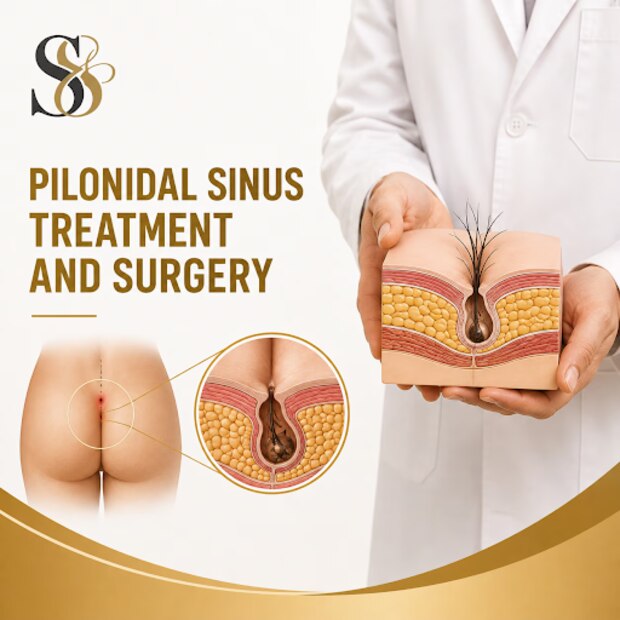
A pilonidal abscess usually sits in the upper part of the natal cleft, producing a painful swelling near tailbone or an upper buttock cleft lump. Look for one or more small midline pits, tenderness, redness, warmth, or openings that release pus or blood.
These are common pilonidal sinus symptoms, but appearance alone cannot confirm the diagnosis.
| Condition | Clues that may distinguish it |
|---|---|
| Pilonidal disease | Upper cleft location, midline pits, tender lump, warmth, redness, or drainage from a pit |
| Infected hair follicle or boil | Smaller surface lesion centred on a visible hair; usually lacks midline pits |
| Skin cyst | Rounded lump, sometimes with a visible central pore; it may become red and painful when infected |
| Pressure-related swelling | Follows prolonged sitting or pressure and may lack pits, warmth, or drainage |
| Perianal abscess | Sits beside the anus or deeper in the buttock; it follows a different examination and drainage pathway |
| Hidradenitis suppurativa | Repeated painful nodules or draining areas in the groin, armpits, or buttock folds |
A lump close to the anus should be examined rather than labelled pilonidal at home. A perianal or ischiorectal abscess can require prompt drainage, while repeated nodules in several skin folds point toward hidradenitis suppurativa. Do not squeeze, cut, or puncture any swelling.
How does an acute abscess differ from a draining or recurrent sinus?
An acute pilonidal abscess builds over hours or days; a draining sinus releases fluid intermittently; recurrent pilonidal disease follows a repeating cycle of both. The differences are clearer when you track speed, symptoms, and what happens after drainage.
| Pattern | Time course and findings | What it means |
|---|---|---|
| Acute pilonidal abscess | A tense, increasingly painful, warm, red, tender or fluctuant swelling develops over hours or days. Sitting and walking can become difficult. | Pus is trapped under pressure and usually needs clinical drainage; antibiotics alone do not empty it. |
| Draining sinus | A small pit intermittently releases pus or blood. Pressure and pain may improve after it drains. | The opening has relieved pressure, but the underlying tract has not necessarily disappeared. |
| Recurrent pilonidal disease | Drainage brings partial improvement, followed by another swelling or abscess. | Hair and debris remain in the pilonidal pits or tract, allowing the cycle to restart. |
A sinus that bursts on its own is not necessarily cured. Residual pits can collect more hair and debris, producing another episode weeks or months later.
A visible pit without pain, redness, or discharge is not by itself a reason for surgery. Discuss definitive treatment when abscesses keep returning, discharge persists, or symptoms disrupt work, sleep, sitting, walking, or other daily activities. An asymptomatic pit or sinus can often be observed with clinician-guided care.
Which warning signs require prompt medical assessment?
Seek prompt medical assessment today for pilonidal sinus urgent symptoms, especially any of these:
| Sign | What to do |
|---|---|
| Fever, chills, or feeling markedly unwell | Arrange urgent assessment; infection may be spreading. |
| Rapidly increasing swelling, substantial pus, or severe or escalating pain | Seek same-day medical care. |
| Fever and spreading redness, particularly beyond the cleft | Seek urgent assessment rather than waiting. |
| Difficulty sitting or walking | Have the swelling examined promptly. |
Seek help sooner if you have diabetes, immune suppression, or a major medical condition. Infection can progress faster, and healing can be more difficult.
A painful lump beside the anus, rather than in the upper cleft, deserves prompt examination. It could be a perianal or ischiorectal abscess, which may need a different examination and drainage plan from pilonidal disease.
Use this safe care while waiting:
- Wash the area gently with water and mild soap, then pat the cleft dry.
- Wear loose clothing and reduce prolonged sitting.
- Do not squeeze, cut, or puncture the lump; this can push infection deeper or cause bleeding.
- Take pain relief only as directed on the medicine label. Restrictions commonly apply with stomach ulcers, kidney disease, blood thinners, pregnancy, or an allergy. Ask a pharmacist or clinician if you are unsure which medicine is safe for you.
How is pilonidal disease diagnosed, and when is drainage needed?
A pilonidal sinus diagnosis usually comes from the history and a careful examination, not a scan. The clinician asks when the lump began, whether it has drained before, how often it returns, and whether similar nodules occur in the groin, armpits, or buttock folds.
1. The clinician inspects and gently examines the cleft, looking for midline pits, warmth, redness, discharge, and a tender or fluctuant swelling. The nearby anus is also examined because a lump beside it may be a perianal or ischiorectal abscess rather than pilonidal disease.
2. Routine ultrasound, CT, or MRI is usually unnecessary when the pits and abscess are typical. Imaging for pilonidal disease, or another test, may be considered when the swelling is deep, unusually located, close to the anus, recurrent despite treatment, or difficult to distinguish from a cyst, hidradenitis, or another condition.
3. A painful, tense, or fluctuant abscess generally needs incision and drainage. Antibiotics alone do not empty trapped pus; antibiotics for pilonidal abscess are considered when substantial cellulitis, fever or other systemic illness, immune suppression, or another clinician-identified indication is present. They are not routine after drainage of an uncomplicated abscess.
If the abscess bursts by itself, pressure and pain may improve, but the sinus can remain. Arrange follow-up because pits may continue collecting hair and debris, causing renewed drainage or another abscess.
When is observation enough, and when should you discuss a procedure?
An asymptomatic pit or sinus usually needs observation, not an operation. Keep the cleft clean and dry, and use hair management only as directed by your clinician; aggressive shaving can irritate skin or cut an open wound.
Persistent drainage, repeated abscesses, or disruption to sitting, sleep, work, or exercise justifies discussing a procedure after the acute infection has settled. The choice depends on the number and extent of tracts, previous treatment, and the surgeon’s experience.
| Option | Main trade-off | When it may fit |
|---|---|---|
| Observation and hygiene | Avoids surgical wounds, but drainage or recurrence can continue | Asymptomatic disease |
| Pit-picking | Small wounds and quicker recovery, but recurrence remains possible | Limited pits or a short tract |
| Phenol, fibrin glue, or endoscopic pilonidal sinus treatment | Less tissue removal, but suitability and availability vary | Selected limited disease |
| Excision left open | Fewer closed-wound problems, but longer dressing care and healing | Extensive disease or selected infected wounds |
| Primary off-midline closure | Faster healing than an open wound, but closure can still break down | Excision when closure is suitable |
| Karydakis flap, Bascom cleft-lift, or Limberg flap | More involved surgery, but generally better wound outcomes than midline closure | Extensive or recurrent disease |
If closure is planned, ask why an off-midline method is preferred: midline wounds have more infection and breakdown. This is skin and soft-tissue surgery, not usually an abdominal or laparoscopic operation. Dr. Shaunak Saha can examine the swelling, confirm the diagnosis, and match the surgical pathway to the disease pattern.
Related service
General Surgery Pilonidal Sinus Treatment and Surgery Pilonidal sinus is a condition affecting the cleft between the buttocks and can cause a painful swelling, drainage or recurrent infection. View service → |
Frequently asked questions
Does the lump’s location and appearance suggest pilonidal disease?
Pilonidal disease usually affects the upper natal cleft near the tailbone. Small midline pits, tenderness, redness, warmth, or openings that release pus or blood support the possibility, although other skin conditions can cause a similar lump.
How does an acute abscess differ from a draining or recurrent sinus?
An acute abscess is a painful, swollen, warm collection of pus. A draining or recurrent sinus has a persistent opening or midline pits that repeatedly release fluid, blood, or pus, sometimes with less pain between flare-ups.
Which warning signs require prompt medical assessment?
Seek prompt assessment for rapidly worsening pain, increasing swelling, fever or chills, spreading redness, foul-smelling drainage, difficulty sitting or walking, or feeling generally unwell.
How is pilonidal disease diagnosed, and when is drainage needed?
A clinician usually diagnoses it by inspecting and gently examining the cleft and surrounding skin. Drainage is commonly needed when an abscess contains trapped pus, because antibiotics alone do not remove that collection.
When is observation enough, and when should you discuss a procedure?
Observation can suit a small, non-infected area without pain, swelling, or drainage. Discuss a procedure when abscesses recur, drainage persists, pits remain symptomatic, or the condition disrupts sitting, work, exercise, or daily care.