A visible vein does not automatically need treatment, but pain, swelling, skin changes or sudden new symptoms can signal a problem that needs medical attention. You will learn how to separate ordinary spider veins from clinically important venous disease, recognise urgent warning signs and understand when assessment or treatment is more than a cosmetic choice.
Key takeaways
- Raised, painful veins with swelling need medical assessment, not cosmetic treatment.
- Sudden one-sided swelling, warmth, redness or breathlessness needs urgent care.
- Venous Doppler ultrasound checks blood flow, reflux and possible clots.
- Treatment options depend on vein findings, symptoms, skin changes and overall health.
Which visible leg veins need assessment rather than cosmetic treatment?
Spider veins are fine red, blue or purple lines close to the skin, often forming branching or web-like patterns. They are usually flat, do not bulge, and cause no swelling or skin damage, so treatment is commonly cosmetic.
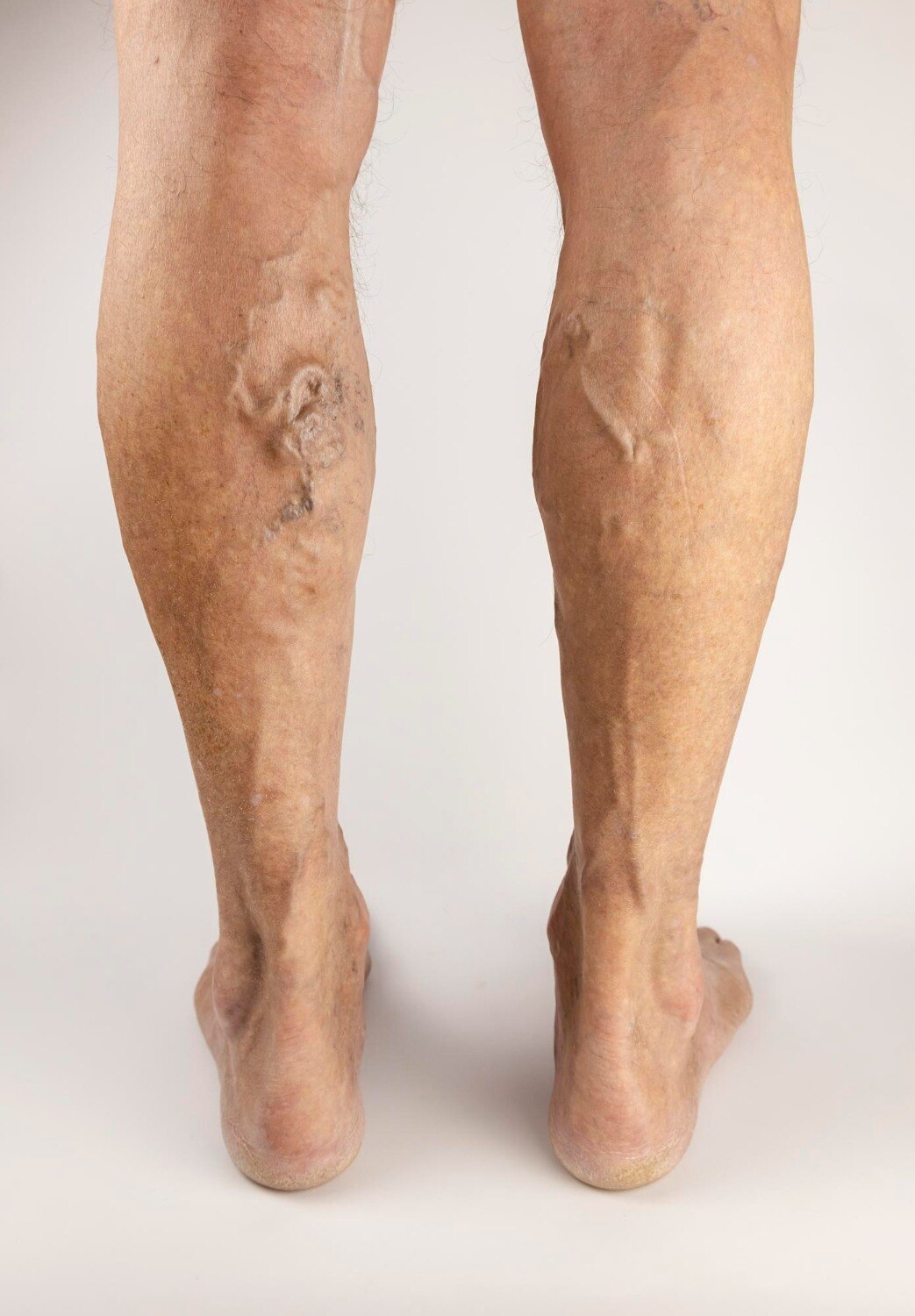
Prominent leg veins deserve clinical review when they are raised, twisted or rope-like, particularly with aching, heaviness, itching or painful veins.
| Feature | Spider veins | Varicose veins needing assessment |
|---|---|---|
| Appearance | Fine, flat red or blue networks | Bulging, twisted or cord-like veins |
| Symptoms | Usually none; occasional mild burning | Aching, pain, heaviness, itching, swelling or night cramps |
| Skin findings | No lasting change | Brown pigmentation, eczema, firm skin or an ankle ulcer |
| Next step | Discuss cosmetic options if they bother you | Arrange medical assessment before choosing varicose veins treatment |
A suddenly painful, red, hard or tender vein is not simply a cosmetic concern; it may indicate superficial thrombophlebitis. Seek prompt medical care for one-sided sudden swelling, warmth, severe pain, spreading redness, a bleeding vein or an ulcer that has not healed within two weeks.
Breathlessness or chest pain requires emergency help because a clot complication is possible.
Walking, elevating your legs and breaking up long periods of standing or sitting can ease symptoms, but they do not remove established varicose veins or correct venous reflux. Pregnancy can temporarily make veins more visible, with improvement after delivery; complications still need assessment.
When painful or swollen veins could be a clot or another condition
Painful or swollen veins are not automatically “just varicose veins.” Sudden one-sided leg swelling, tenderness, warmth and redness in leg veins require assessment for deep vein thrombosis, especially after surgery, long travel, pregnancy, immobility or a previous clot.
| Condition | Typical clues | What makes it different |
|---|---|---|
| Varicose veins | Rope-like, bulging surface veins; aching or heaviness after standing | Symptoms usually build gradually and improve when you elevate the leg |
| Deep vein thrombosis | One-sided leg swelling, deep calf or thigh pain, tenderness, warmth or redness | The clot lies in a deep vein and may have few visible surface changes |
| Superficial thrombophlebitis | A suddenly painful, red, firm, cord-like vein near the skin | Inflammation and clot affect a superficial vein; spreading redness or swelling needs prompt review |
| Muscle injury | Pain follows exercise, a blow or awkward movement; pain increases when the muscle is used | Bruising or a local tender spot supports injury, but swelling after injury still needs assessment if severe |
| Leg oedema | Diffuse puffiness around the ankle or calf, sometimes leaving a dent when pressed | Fluid accumulation is not the same as a single painful vein and can affect both legs |
Do not massage a suddenly painful, hard or reddened vein. Arrange prompt medical care for marked swelling, severe pain, spreading redness, skin discolouration, a bleeding vein or a non-healing ankle ulcer.
Call emergency services for breathlessness, chest pain, coughing up blood, fainting or a rapid heartbeat with leg symptoms; these can signal a pulmonary embolism.
How symptoms and skin changes alter the need for treatment
Observation is reasonable when veins are visible but cause no pain, heaviness, swelling, itching or skin damage. Leg elevation, regular walking and avoiding long periods of standing can ease mild symptoms, but they will not remove established veins or correct abnormal venous reflux.
Arrange clinical assessment when symptoms interfere with daily life or keep worsening. Ask whether duplex ultrasound is needed to confirm reflux and guide treatment, rather than treating appearance alone.
- Aching, heaviness, night cramps or evening leg swelling that persists or worsens
- Itching, skin thickening and eczema around the lower leg or ankle
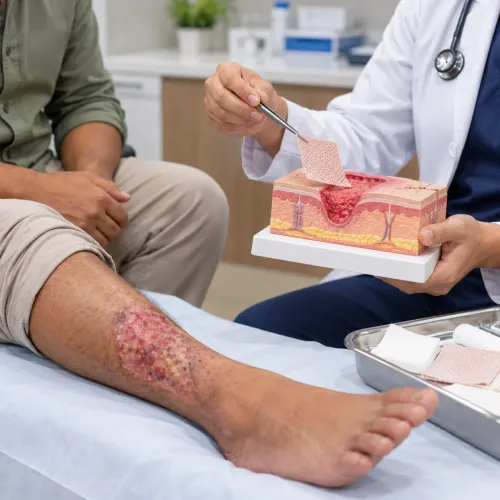
- Brown or dark pigmentation, hardened skin, or a sore near the ankle
- A venous leg ulcer below the knee that has not healed within two weeks, or an ulcer that has healed previously
- Bleeding from a varicose vein or superficial thrombophlebitis linked to varicose veins
Skin changes indicate chronic venous insufficiency, so treatment becomes more important than cosmetic preference. Do not self-treat an ankle ulcer with compression stockings: significant arterial disease can make compression unsafe, and vascular assessment should come first. Even without an ulcer, progressive symptoms or damaged skin justify referral to a vascular service.
A procedure treats faulty superficial flow, not merely a prominent vein; recurrence or new veins can still occur.
What a venous Doppler assessment shows and how to prepare
A venous Doppler ultrasound examines the deep and superficial venous systems, showing whether veins are open, narrowed or blocked and whether blood moves towards the heart normally. It measures blood-flow direction and identifies valve reflux, in which blood falls backward when valves fail to close properly.
During the specialist assessment:
1. You will describe pain, heaviness, swelling, itching, night cramps, skin changes or bleeding, including when symptoms worsen. The clinician examines both legs, often while you stand, because gravity can make varicose veins and swelling more visible.
2. During the scan, you lie or stand while an ultrasound probe moves over the skin with gel. The sonographer gently compresses veins and may ask you to cough or strain. These actions reveal obstruction and reflux, then help map which veins are responsible and whether treatment planning requires attention to particular branches.
3. The appointment usually needs no fasting. Wear loose clothing that allows access from the groin to the ankle, and bring previous scan reports, a list of medicines, details of past deep-vein thrombosis or vein procedures, pregnancy history, and information about ulcers, bleeding or compression-stocking use.
Do not massage a suddenly painful, red or hard vein before assessment. Sudden one-sided swelling, chest pain or breathlessness needs urgent medical care rather than a routine scan.
Which varicose vein treatments may be considered after assessment?
Confirmed reflux does not automatically mean an operation. Specialists match treatment to the reflux pattern, symptoms, skin damage, vein anatomy, general health and your priorities; a prominent vein without troublesome symptoms or complications can be observed. Duplex findings show whether superficial reflux is treatable and guide the choice.
| Option | What it involves | When it is considered |
|---|---|---|
| Observation and supportive measures | Walking, leg elevation, avoiding prolonged standing and compression hosiery | Mild symptoms, no complications, or when a procedure is unsuitable; these measures ease symptoms but do not correct reflux |
| Endothermal ablation | Sealing the faulty vein with heat delivered through a catheter | Usual first choice for suitable truncal reflux |
| Ultrasound-guided foam sclerotherapy | Injecting foam to close the refluxing vein under ultrasound guidance | When endothermal ablation is unsuitable or the vein pattern favours injection treatment |
| Surgery | Tying and removing, or otherwise surgically treating, the faulty vein | Usually when ablation and foam treatment are unsuitable |
The usual sequence is endothermal ablation first, foam next, and surgery when both minimally invasive options are unsuitable. Dr. Shaunak Saha can help interpret the duplex map alongside symptoms and examine whether another cause needs attention.
Ask for vascular assessment before using firm compression if you have poor circulation. A venous leg ulcer below the knee that remains open for two weeks needs referral, not self-treatment. Procedures can cause bruising, inflammation, pigmentation, nerve injury or deep-vein thrombosis; new veins or recurrence can also develop.
Related service
Vascular Surgery Varicose veins are enlarged, twisted veins that most commonly occur in the legs. View service → |
Frequently asked questions
Which visible leg veins need medical assessment rather than cosmetic treatment?
Raised, twisted veins and veins linked with pain, swelling, heaviness, skin changes or sores need assessment. Flat spider veins without symptoms are usually treated for appearance.
When could painful or swollen leg veins indicate a clot?
Sudden swelling in one leg with pain, warmth or redness can indicate deep vein thrombosis and needs urgent medical evaluation. Breathlessness or chest pain requires emergency care.
How do symptoms and skin changes affect the need for varicose vein treatment?
Persistent aching, heaviness, night cramps, ankle swelling, itching, brown skin, eczema, hard tender veins or ulcers increase the need for clinical assessment and treatment planning.
What does a venous Doppler assessment show?
A venous Doppler ultrasound shows blood flow, blocked veins, clots and backward flow caused by faulty valves. Wear loose clothing and bring details of your symptoms and medicines.
Which varicose vein treatments may be considered after assessment?
Options can include compression therapy, lifestyle measures, endovenous ablation, sclerotherapy, phlebectomy or surgery, depending on the ultrasound findings and symptoms.