A hernia develops when tissue pushes through a weakened area in the surrounding muscle or abdominal wall. It may first appear as a small lump that becomes more noticeable while standing, coughing, lifting, or straining.
For suitable patients, Laparoscopic Hernia Repair is one surgical approach used to reinforce the weakened area.
Why hernias develop
Several factors can contribute to increased abdominal pressure or weakness of the abdominal wall.
These can include chronic coughing, constipation and repeated straining, heavy physical exertion, previous abdominal surgery, ageing, pregnancy, and individual anatomical factors.
Common abdominal wall hernias include inguinal, umbilical and incisional hernias.
What happens during laparoscopic repair
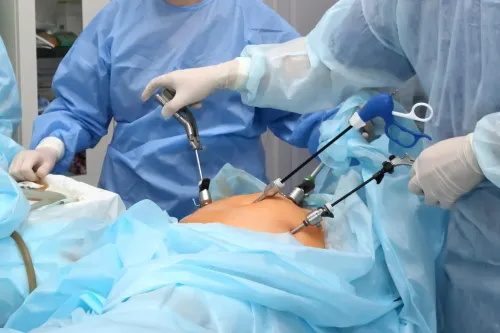
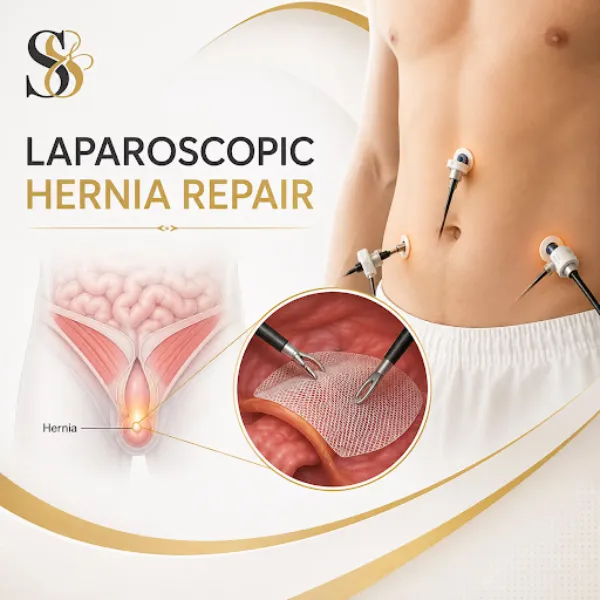
Laparoscopic hernia surgery is generally performed through small abdominal incisions. A camera allows the surgeon to view the hernia internally while instruments are used to repair the defect.
Mesh may be used in many adult hernia repairs to reinforce the weakened area, depending on the type of hernia and surgical approach.
Laparoscopic surgery can be particularly useful in selected circumstances, but suitability needs to be determined individually.
What factors influence the surgical approach
There is no single operation that is ideal for every hernia.
The surgeon may consider:
- Hernia type and location
- Size of the defect
- Whether one or both sides are affected
- Previous operations
- Recurrent versus first-time hernia
- Patient's general health
- Anaesthetic considerations
- Findings during clinical examination
The choice between laparoscopic and open surgery therefore involves more than simply comparing incision size.
Can a hernia heal without surgery
An established adult hernia generally does not close on its own. Some hernias can remain relatively stable, while others gradually enlarge or become more symptomatic.
The timing and need for surgery should be decided after medical assessment.
A hernia that suddenly becomes very painful, firm, difficult to reduce, or associated with vomiting or abdominal distension requires urgent medical evaluation because tissue may have become trapped.
For people considering hernia surgery in Aundh, Maharashtra, the consultation should include a clear discussion about the type of hernia, available repair methods, anaesthesia, expected recovery, activity restrictions, and possible complications.
Dr Shaunak Saha assesses abdominal wall and groin hernias and discusses whether laparoscopic repair is appropriate based on individual findings.
Choosing a hernia procedure is ultimately a clinical decision. Understanding the characteristics of the hernia and the advantages and limitations of each technique helps patients participate more meaningfully in treatment planning.
Keywords